A mech game prototype, pushed by Gemini 4 Argon
agent (cont.)
+24:20read_file{"Path":"/tmp/inspect/atelier_b_fixed.png"}
input
{ "Path": "/tmp/inspect/atelier_b_fixed.png" }result, 1 line
Showing binary file of type image/png
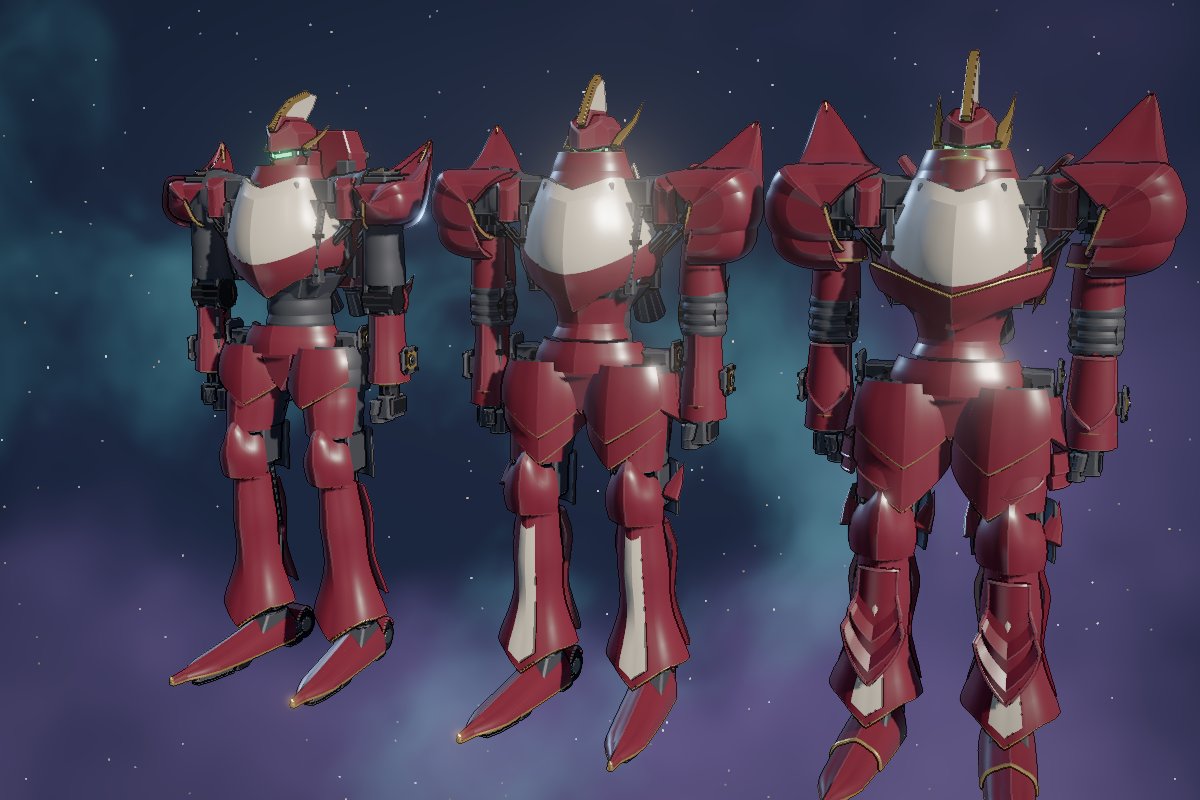
step_239_media_0.jpg
agent
+24:31reasoning
The image comparison reveals a significant change in the character's foot design. The original wide, blocky feet are replaced with sleek, pointed sabaton-style feet in the updated image. This suggests a change in the character's overall style or model.
The removal of the crotch and chest coverings reveals clean armor design, including painted crotch armor and layered tassets. The breastplate, knee guards, and greaves now feature a sharp medial keel ridge. Examining the pauldrons suggests that shadow near the hem might be from the leaf() function in board_sleek.py.
The lin(116, -96, 28) parameter within the leaf() function is critical; it defines the pauldron's undercurve. This setting suggests a significant inward curl, effectively positioning the lower pauldron surface to face downward, away from the studio lights. The resulting self-shadowing from the overhead lighting could explain the perceived shape change.
The initial hypothesis was that the pauldron's undercurve accounts for the observed shape. Comparing board_plate.py and board_sleek.py reveals a critical difference. The board_plate.py pauldron flares outward at its base, while board_sleek.py's leaf() function curls inward. Adjusting the inward curl to flare outward in board_sleek.py should produce the desired wing-blade shape. Additionally, the gap between the breastplate and pauldron in the updated image warrants further investigation to determine if adjusting the shoulder root structure resolves the issue.
run_command{"CommandLine":"node -e '\nimport { createServer } from \"vite\";\nimport { chromium } from \"playwright\";\nconst srv = await createServer({ server: { port: 0 }, logLevel: \"error\" });\nawait srv.listen();\nconst base = srv.resolvedUrls.local[0].replace(/\\/$/, \"\");\nconst browser = await chromium.launch({ args: [\"--use-angle=swiftshader\", \"--enable-unsafe-swiftshader\", \"--ignore-gpu-blocklist\"] });\nconst context = await browser.newContext({ viewport: { width: 1200, height: 800 } });\nawait context.addInitScript(\"const _raf = window.requestAnimationFrame; window.requestAnimationFrame = (cb) => { if (!window.__ready) return _raf(cb); return 0; };\");\nconst page = await context.newPage();\nawait page.goto(base + \"/?view=lab_atelier_a&palette=houses&look=kit&yaw=22&pitch=10&nolabel=1\", { waitUntil: \"domcontentloaded\" });\nawait page.waitForFunction(\"window.__ready === true\", null, { timeout: 60000 });\nawait page.screenshot({ path: \"/tmp/inspect/atelier_a_fixed.png\" });\nawait browser.close();\nawait srv.close();\nprocess.exit(0);\n' --input-type=module","WaitMsBeforeAsync":10000,"toolSummary":"Render fixed lab_atelier_a screenshot"}
input
{ "CommandLine": "node -e '\nimport { createServer } from \"vite\";\nimport { chromium } from \"playwright\";\nconst srv = await createServer({ server: { port: 0 }, logLevel: \"error\" });\nawait srv.listen();\nconst base = srv.resolvedUrls.local[0].replace(/\\/$/, \"\");\nconst browser = await chromium.launch({ args: [\"--use-angle=swiftshader\", \"--enable-unsafe-swiftshader\", \"--ignore-gpu-blocklist\"] });\nconst context = await browser.newContext({ viewport: { width: 1200, height: 800 } });\nawait context.addInitScript(\"const _raf = window.requestAnimationFrame; window.requestAnimationFrame = (cb) => { if (!window.__ready) return _raf(cb); return 0; };\");\nconst page = await context.newPage();\nawait page.goto(base + \"/?view=lab_atelier_a&palette=houses&look=kit&yaw=22&pitch=10&nolabel=1\", { waitUntil: \"domcontentloaded\" });\nawait page.waitForFunction(\"window.__ready === true\", null, { timeout: 60000 });\nawait page.screenshot({ path: \"/tmp/inspect/atelier_a_fixed.png\" });\nawait browser.close();\nawait srv.close();\nprocess.exit(0);\n' --input-type=module", "WaitMsBeforeAsync": 10000, "toolSummary": "Render fixed lab_atelier_a screenshot" }result, 3 lines
Command exited with code 0.

No output from the command.
read_file{"Path":"/tmp/inspect/atelier_a_fixed.png"}
input
{ "Path": "/tmp/inspect/atelier_a_fixed.png" }result, 1 line
Showing binary file of type image/png
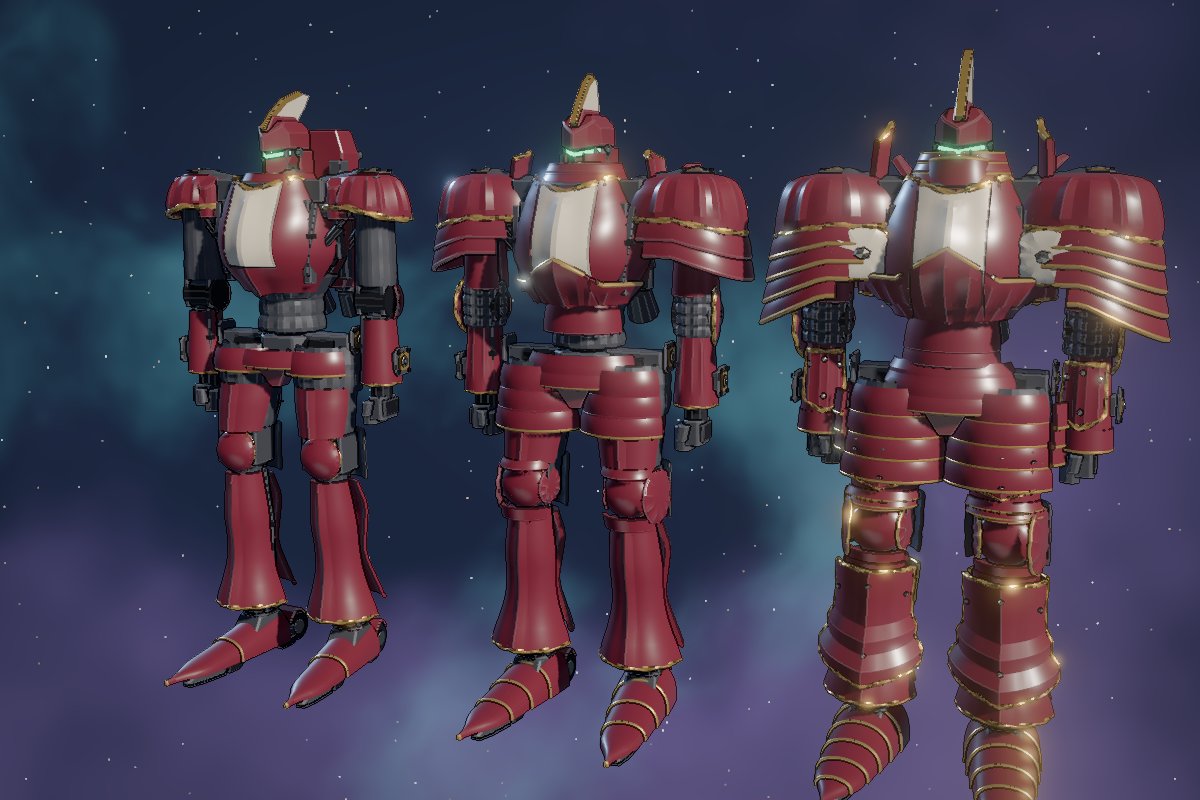
step_243_media_0.jpg
agent
+25:33reasoning
Observing the image transformations, it's clear the target is to modify every instance of a specific gothic flute. Initial focus is on identifying and isolating the element through its repeated occurrences across the images. The goal is to apply the fix to all instances.
The image transformations showcase significant improvements: specular highlights are crisper, the medial ridge on armor is sharper, and several unsightly features have been removed or refined. Comparing 'board_sleek.py' and 'board_plate.py' reveals that a specific element looked bulbous because of an issue in line 177 of 'board_sleek.py'. This also opens up new possibilities for improving related elements.
The current pauldron's inward curl and gap are evident from the sweep angles and shoulder_root's positioning. The goal is a flared edge at the hem by adjusting the leaf sweep and under-leaf ranges within board_sleek.py. A curved spaulder collar, replacing the flat box in shoulder_root, will bridge the gap.
read_file{"Path":"~/work/sortie/src/render/decals.ts"}
input
{ "Path": "~/work/sortie/src/render/decals.ts" }result, 139 lines
Showing lines 1-138 of 138
1: import * as THREE from 'three';
2: import { DecalGeometry } from 'three/addons/geometries/DecalGeometry.js';
3:
4: // Markings projected onto armour: unit numbers, designations, caution stencils, hazard bands and the
5: // company emblem. Each decal is found by casting a ray at the rest pose, projected onto the mesh it
6: // hits, and parented to that mesh so it moves with its joint.
7:
8: export type DecalKind = 'number' | 'stencil' | 'hazard' | 'emblem';
9:
10: export interface DecalSpec {
11:   kind: DecalKind;
12:   text?: string;
13:   /** A point just off the surface, model space (three.js axes: +X the frame's left, +Z forward). */
14:   at: [number, number, number];
15:   /** Direction into the surface. */
16:   dir: [number, number, number];
17:   /** Width and height in metres. */
18:   size: [number, number];
19:   /** Roll around the surface normal, degrees. */
20:   roll?: number;
21:   color?: string;
22: }
23:
24: const textures = new Map<string, THREE.CanvasTexture>();
25:
26: function texture(spec: DecalSpec): THREE.CanvasTexture {
27:   const key = `${spec.kind}:${spec.text ?? ''}:${spec.color ?? ''}:${spec.size.join('x')}`;
28:   const hit = textures.get(key);
29:   if (hit) return hit;
30:   const W = 512, H = Math.max(32, Math.round((512 * spec.size[1]) / spec.size[0]));
31:   const c = document.createElement('canvas');
32:   c.width = W;
33:   c.height = H;
34:   const g = c.getContext('2d')!;
35:   const ink = spec.color ?? '#20242a';
36:   g.fillStyle = ink;
37:   g.strokeStyle = ink;
38:   g.textAlign = 'center';
39:   g.textBaseline = 'middle';
40:   if (spec.kind === 'hazard') {
41:     g.fillStyle = '#e2b42a';
42:     g.fillRect(0, 0, W, H);
43:     g.fillStyle = '#15171a';
44:     for (let x = -H; x < W + H; x += H * 1.4) {
45:       g.beginPath();
46:       g.moveTo(x, H); g.lineTo(x + H * 0.7, H); g.lineTo(x + H * 1.4, 0); g.lineTo(x + H * 0.7, 0);
47:       g.fill();
48:     }
49:   } else if (spec.kind === 'emblem') {
50:     const r = Math.min(W, H) * 0.42;
51:     g.lineWidth = r * 0.12;
52:     g.beginPath();
53:     g.arc(W / 2, H / 2, r, 0, Math.PI * 2);
54:     g.stroke();
55:     g.beginPath();
56:     g.moveTo(W / 2 - r * 0.55, H / 2 - r * 0.25);
57:     g.lineTo(W / 2, H / 2 + r * 0.45);
58:     g.lineTo(W / 2 + r * 0.55, H / 2 - r * 0.25);
59:     g.lineTo(W / 2 + r * 0.3, H / 2 - r * 0.25);
60:     g.lineTo(W / 2, H / 2 + r * 0.05);
61:     g.lineTo(W / 2 - r * 0.3, H / 2 - r * 0.25);
62:     g.closePath();
63:     g.fill();
64:   } else {
65:     const size = spec.kind === 'number' ? H * 0.92 : H * 0.62;
66:     g.font = `600 ${size}px "Chakra Petch", "Arial Narrow", sans-serif`;
67:     g.fillText(spec.text ?? '', W / 2, H / 2 + size * 0.04, W * 0.96);
68:     if (spec.kind === 'stencil') {
69:       // stencil bridges: thin vertical breaks through the letters
70:       g.globalCompositeOperation = 'destination-out';
71:       for (let x = W * 0.08; x < W; x += W / Math.max(4, (spec.text ?? '').length)) g.fillRect(x, 0, W * 0.006, H);
72:       g.globalCompositeOperation = 'source-over';
73:     }
74:   }
75:   // wear: knock speckles out of the paint
76:   g.globalCompositeOperation = 'destination-out';
77:   let s = key.length * 9973;
78:   const rnd = () => ((s = (s * 16807) % 2147483647) / 2147483647);
79:   for (let i = 0; i < (W * H) / 900; i++) {
80:     g.globalAlpha = 0.3 + rnd() * 0.7;
81:     g.fillRect(rnd() * W, rnd() * H, 1 + rnd() * 3, 1 + rnd() * 2);
82:   }
83:   g.globalAlpha = 1;
84:   g.globalCompositeOperation = 'source-over';
85:   const t = new THREE.CanvasTexture(c);
86:   t.colorSpace = THREE.SRGBColorSpace;
87:   t.anisotropy = 8;
88:   textures.set(key, t);
89:   return t;
90: }
91:
92: const ray = new THREE.Raycaster();
93: const helper = new THREE.Object3D();
94:
95: export function applyDecals(root: THREE.Object3D, specs: DecalSpec[]) {
96:   root.updateMatrixWorld(true);
97:   const meshes: THREE.Mesh[] = [];
98:   root.traverse((o) => {
99:     const m = o as THREE.Mesh;
100:     if (m.isMesh && !(m.material as THREE.MeshBasicMaterial).isMeshBasicMaterial && !m.userData.decal) meshes.push(m);
101:   });
102:   for (const spec of specs) {
103:     const dir = new THREE.Vector3(...spec.dir).normalize();
104:     const at = new THREE.Vector3(...spec.at).applyMatrix4(root.matrixWorld);
105:     ray.set(at.clone().addScaledVector(dir, -3), dir.clone().transformDirection(root.matrixWorld));
106:     const hit = ray.intersectObjects(meshes, false)[0];
107:     if (!hit?.face) continue;
108:     const mesh = hit.object as THREE.Mesh;
109:     const normal = hit.face.normal.clone().transformDirection(mesh.matrixWorld);
110:     helper.position.copy(hit.point);
111:     helper.lookAt(hit.point.clone().add(normal));
112:     helper.rotateZ(THREE.MathUtils.degToRad(spec.roll ?? 0));
113:     const geo = new DecalGeometry(mesh, hit.point, helper.rotation, new THREE.Vector3(spec.size[0], spec.size[1], 0.6));
114:     geo.applyMatrix4(mesh.matrixWorld.clone().invert());
115:     const mat = new THREE.MeshStandardMaterial({
116:       map: texture(spec), transparent: true, depthWrite: false, polygonOffset: true, polygonOffsetFactor: -4,
117:       roughness: 0.55, metalness: 0,
118:     });
119:     const decal = new THREE.Mesh(geo, mat);
120:     decal.userData.decal = true;
121:     decal.receiveShadow = true;
122:     mesh.add(decal);
123:   }
124: }
125:
126: /** The striker's markings: unit number on the shoulders and leg, designation, stencils, hazard bands. */
127: export const STRIKER_DECALS: DecalSpec[] = [
128:   { kind: 'number', text: '07', at: [4.8, 15.15, 0], dir: [-1, 0, 0], size: [0.95, 0.7], color: '#e9edf0' },
129:   { kind: 'emblem', at: [-4.8, 15.15, 0], dir: [1, 0, 0], size: [0.8, 0.8], color: '#e9edf0' },
130:   { kind: 'number', text: '07', at: [2.6, 3.6, 0.15], dir: [-1, 0, 0], size: [0.55, 0.42], color: '#e9edf0' },
131:   { kind: 'stencil', text: 'MF-07', at: [1.15, 9.25, 3], dir: [0, 0, -1], size: [0.7, 0.2] },
132:   { kind: 'stencil', text: 'NO STEP', at: [1.3, 10.05, 3], dir: [0, 0, -1], size: [0.6, 0.15], roll: -20 },
133:   { kind: 'stencil', text: 'NO STEP', at: [-1.3, 10.05, 3], dir: [0, 0, -1], size: [0.6, 0.15], roll: 20 },
134:   { kind: 'hazard', at: [1.2, 6.55, 3], dir: [0, 0, -1], size: [0.6, 0.12] },
135:   { kind: 'hazard', at: [-1.2, 6.55, 3], dir: [0, 0, -1], size: [0.6, 0.12] },
136:   { kind: 'stencil', text: 'DANGER EXHAUST', at: [0, 12.9, -4], dir: [0, 0, 1], size: [1.1, 0.16] },
137:   { kind: 'stencil', text: 'STRIKER', at: [-2.6, 3.4, 0.15], dir: [1, 0, 0], size: [0.9, 0.2], roll: 90, color: '#e9edf0' },
138: ];
agent
+25:55reasoning
kit/makers/atelier.py and other Python kit scripts place empty "bearing.*" nodes onto the model. Initial thought was that these nodes were meant to be present, but now the issue is that src/render/decals.ts should be handling these empty nodes, but it's not. This is likely the root cause.
The Python scripts correctly author the bearing.* nodes within the model data, including directional and size metadata. However, the TypeScript decal rendering code fails to process this authored data, meaning the bearing nodes are created, but never read or used. A simple traversal of the model tree within the rendering code, filtering for the bearing.* node name prefix, will allow proper processing of position, direction, and size data for decal projection. The viewer code's MechRig instantiation, specifically the pose data, is unrelated to this issue.
read_file{"EndLine":140,"Path":"~/work/sortie/src/render/mech.ts","StartLine":1}
input
{ "EndLine": 140, "Path": "~/work/sortie/src/render/mech.ts", "StartLine": 1 }result, 141 lines
Showing lines 1-140 of 209
1: import * as THREE from 'three';
2: import { find, nodes } from './assets';
3: import { Exhaust, KINDS, type NozzleKind, type ThrustReading } from './exhaust';
4: import { PALETTES, type PaletteName } from './palette';
5: import { PLUME_HULL, plumeMaterial, plumeVisible, setPlume } from './plume';
6:
7: /** Joint rotations in degrees, glTF axes: X pitches a limb (negative swings it forward), Z swings it
8:  *  sideways (positive moves a left limb outward), Y twists. */
9: export type Pose = Partial<Record<Joint, [number, number, number]>>;
10:
11: export const JOINTS = [
12:   'pelvis', 'waist', 'torso', 'neck', 'head', 'backpack',
13:   'shoulder.L', 'upperarm.L', 'forearm.L', 'hand.L', 'shoulder.R', 'upperarm.R', 'forearm.R', 'hand.R',
14:   'thigh.L', 'shin.L', 'foot.L', 'thigh.R', 'shin.R', 'foot.R', 'binder.L', 'binder.R',
15: ] as const;
16: export type Joint = (typeof JOINTS)[number];
17:
18: export const POSES = {
19:   stand: {
20:     'upperarm.L': [0, 0, 6], 'upperarm.R': [0, 0, -6], 'forearm.L': [-12, 0, 0], 'forearm.R': [-12, 0, 0],
21:   },
22:   /** Standing on the catapult: knees bent, leaning into the launch. */
23:   launch: {
24:     pelvis: [8, 0, 0], torso: [10, 0, 0], head: [-14, 0, 0],
25:     'thigh.L': [-38, 0, 2], 'thigh.R': [-38, 0, -2], 'shin.L': [58, 0, 0], 'shin.R': [58, 0, 0],
26:     'foot.L': [-20, 0, 0], 'foot.R': [-20, 0, 0],
27:     'upperarm.L': [-18, 0, 14], 'forearm.L': [-40, 0, 0], 'upperarm.R': [-30, 0, -8], 'forearm.R': [-50, 0, 0],
28:     'binder.L': [18, 0, 0], 'binder.R': [18, 0, 0],
29:   },
30:   /** The launch crouch for a heavy: 24 m in a 26 m tube, so knees deep, head down and binders folded,
31:    *  which brings it under the tube's signal box. */
32:   launch_heavy: {
33:     pelvis: [12, 0, 0], torso: [12, 0, 0], head: [-20, 0, 0],
34:     'thigh.L': [-58, 0, 3], 'thigh.R': [-58, 0, -3], 'shin.L': [106, 0, 0], 'shin.R': [106, 0, 0],
35:     'foot.L': [-48, 0, 0], 'foot.R': [-48, 0, 0],
36:     'upperarm.L': [-18, 0, 14], 'forearm.L': [-40, 0, 0], 'upperarm.R': [-30, 0, -8], 'forearm.R': [-50, 0, 0],
37:     'binder.L': [40, 0, 0], 'binder.R': [40, 0, 0],
38:   },
39:   /** Free flight, rifle up. */
40:   flight: {
41:     pelvis: [6, 0, 0], torso: [-4, 0, 0], head: [-2, 0, 0],
42:     'thigh.L': [-22, 0, 4], 'thigh.R': [6, 0, -3], 'shin.L': [42, 0, 0], 'shin.R': [30, 0, 0],
43:     'foot.L': [8, 0, 0], 'foot.R': [18, 0, 0],
44:     'upperarm.L': [-22, 0, 16], 'forearm.L': [-46, 0, 0],
45:     'upperarm.R': [-62, -8, -6], 'forearm.R': [-26, 0, 0], 'hand.R': [0, 0, 0],
46:     'binder.L': [-6, 0, 0], 'binder.R': [-6, 0, 0],
47:   },
48: } satisfies Record<string, Pose>;
49: export type PoseName = keyof typeof POSES;
50:
51: /** The catapult pose for a size class: the striker's, with a deeper crouch for heavies. */
52: export const launchPose = (cls: string): Pose => (cls === 'heavy' ? POSES.launch_heavy : POSES.launch);
53:
54: export interface Nozzle {
55:   node: THREE.Object3D;
56:   dir: THREE.Vector3; // exhaust direction in the node's parent space
57:   radius: number;
58:   kind: NozzleKind;
59:   plume: THREE.Mesh;
60: }
61:
62: const tmpQ = new THREE.Quaternion();
63: const _sum = new THREE.Vector3();
64: const _at = new THREE.Vector3();
65: const _white = new THREE.Color(1, 1, 1);
66: const tmpE = new THREE.Euler();
67: const D = THREE.MathUtils.DEG2RAD;
68:
69: /** A frame model's joints, posed by rotation, with weapons held at grip.R and thruster plumes. */
70: export class MechRig {
71:   readonly joints = new Map<Joint, THREE.Object3D>();
72:   readonly nozzles: Nozzle[] = [];
73:   readonly cockpit: THREE.Object3D;
74:   readonly grip: THREE.Object3D;
75:   held: THREE.Object3D | null = null;
76:   /** Plume state, stepped by thrust(). */
77:   readonly exhaust = new Exhaust();
78:   /** One plume material per nozzle kind: a kind fires together. */
79:   private plumeMats: Record<NozzleKind, THREE.ShaderMaterial>;
80:   private exhaustColor: THREE.Color;
81:   private targets = new Map<Joint, THREE.Quaternion>();
82:
83:   constructor(readonly root: THREE.Object3D) {
84:     const map = nodes(root);
85:     for (const j of JOINTS) {
86:       const n = find(map, j);
87:       if (n) this.joints.set(j, n);
88:     }
89:     this.cockpit = find(map, 'cockpit') ?? root;
90:     this.grip = find(map, 'grip.R') ?? root;
91:     const paint = PALETTES[(root.userData.palette as PaletteName | undefined) ?? 'merc'].glow_exhaust;
92:     this.exhaustColor = new THREE.Color(paint.color);
93:     this.plumeMats = {
94:       main: plumeMaterial(this.exhaustColor, paint.glow ?? 1, 0),
95:       binder: plumeMaterial(this.exhaustColor, paint.glow ?? 1, 17.3),
96:       calf: plumeMaterial(this.exhaustColor, paint.glow ?? 1, 41.7),
97:     };
98:     root.traverse((o) => {
99:       const dir = o.userData.dir as number[] | undefined;
100:       if (!dir || !/^nozzle/.test(o.name)) return;
101:       const kind: NozzleKind = /main/.test(o.name) ? 'main' : /binder/.test(o.name) ? 'binder' : 'calf';
102:       const radius = (o.userData.radius as number) ?? 0.5;
103:       // the plume's own space is in nozzle radii (render/plume.ts)
104:       const plume = new THREE.Mesh(PLUME_HULL, this.plumeMats[kind]);
105:       const d = new THREE.Vector3(...(dir as [number, number, number]));
106:       plume.quaternion.setFromUnitVectors(new THREE.Vector3(0, 0, 1), d);
107:       plume.scale.setScalar(radius);
108:       plume.visible = false;
109:       plume.renderOrder = 2;
110:       o.add(plume);
111:       this.nozzles.push({ node: o, dir: d, radius, kind, plume });
112:     });
113:   }
114:
115:   /** Any named node of the model (extras like harken.L), or null. */
116:   node(name: string): THREE.Object3D | null {
117:     return find(nodes(this.root), name) ?? null;
118:   }
119:
120:   /** Snap to a pose. */
121:   apply(pose: Pose) {
122:     for (const [j, node] of this.joints) {
123:       const r = pose[j] ?? [0, 0, 0];
124:       node.quaternion.setFromEuler(tmpE.set(r[0] * D, r[1] * D, r[2] * D));
125:     }
126:   }
127:
128:   /** Snap to a pose and measure how high its soles sit above the root, in world metres (root
129:    *  upright). A crouch lifts the feet, so the frame drops by this much to stand on its clamps. */
130:   soles(pose: Pose): number {
131:     this.apply(pose);
132:     this.root.updateMatrixWorld(true);
133:     const v = new THREE.Vector3();
134:     let min = Infinity;
135:     for (const j of ['foot.L', 'foot.R'] as const) {
136:       this.joints.get(j)?.traverse((o) => {
137:         const p = (o as THREE.Mesh).isMesh ? (o as THREE.Mesh).geometry.attributes.position : null;
138:         if (!p) return;
139:         for (let i = 0; i < p.count; i++) min = Math.min(min, v.fromBufferAttribute(p, i).applyMatrix4(o.matrixWorld).y);
140:       });
agent
+26:17reasoning
mech.ts reveals a list of poses, including "stand," "launch," and "flight". Considering the earlier observation about the need for a combat stance, adding a "guard" pose to the existing list seems relevant. This could address the perceived lack of a heroic standing combat stance in the animation options.
The documentation describes a "guard" pose suitable for a heroic stance, with specific joint angle configurations detailed. This pose, designed for a wide stance with the chest and head turned, will be considered as a candidate for the combat animation needs. The viewer.ts file seems relevant for handling pose selection.
The viewer.ts file appears central to animation control; the goal is to expand pose application based on query parameters. Modifying the viewer to apply poses from a pose list, support a pilot scale model, and enable thruster plumes seems a reasonable approach to achieve the desired animation features.
However, the prior consideration of fixes in the kit/ files, specifically regarding the sharp edge angles, might affect the visual quality. The changes in the kit/ could create crisp metallic creases.
Addressing visual issues involves multiple files: adjustments to knightkit.py will correct armor protrusions. Also, frame_std.py needs foot scaling and tapering fixes and board_sleek.py requires edits to pauldron flare and spaulder.
Adding a rigged hero target such as atelier_estoc or modifications to existing hero frames will ensure proper scaling with the pilot. Finally, fixes in the src/ files will ensure the visual improvements are correctly rendered.
Adding the "guard" pose involves updating several files: mech.ts to include the new pose, and viewer.ts and sheet.ts to enable its application across frames. The decals.ts file needs modification to project heraldry. Addressing the SwiftShader stall in viewer.ts should improve still image capture time.
The focus shifts to generating a visual artifact within the existing project constraints and document the generation process.
The goal is to generate a visual diagnostic sheet showcasing the Estoc's state before and after proposed modifications. A single image will be rendered, likely named out/estoc-overhaul.png, using the project's multi-viewport rendering capabilities, similar to existing diagnostic scripts. This image will compare the Estoc in its current state to modified versions to highlight improvements. The sheet will consist of multiple panels to allow for a direct side-by-side comparison of the model with different aspects of the proposed adjustments.
The initial visual issues include chest protrusions, a crotch slab, and oversized feet. The first proposed fix involves addressing these geometry and shading problems with fixes in specific kit and source files, and renders a 3/4 front view of the Estoc.
This corrected Estoc, post-fix, is rendered with specific details: the fixed geometry, a tapered sabaton, and projected heraldry. The image will show an asymmetric "guard" stance with the pilot's scale next to the Estoc. The final image will show the Estoc in a 3/4 rear "flight" pose, highlighting thruster ignition and addressing prior concerns about the rear section.
The goal is to produce a single image demonstrating the visual improvements. The image, estoc-overhaul.png, will be generated using existing project assets and techniques, avoiding external dependencies. Panel 1 will show the original Estoc with its initial visual issues.
Panel 2 will show the Estoc after applying fixes, highlighting geometry, tapering, and heraldry modifications. Panel 3 will depict the corrected Estoc in a "flight" pose, including thruster effects.
The initial render demonstrates a well-scaled Estoc in the "guard" pose with the pilot, confirming the kit integration. The visual test suggests that combining this pose with a strong rear silhouette and the thruster plume system resolves previous concerns about the rear appearance in flight. The objective now is to elevate the Estoc's visual quality in Panels 2 and 3.
Analysis focuses on subtle geometric adjustments within board_sleek.py. Specifically, the pauldrons, defined in lines 163-182, are the priority to enhance the overall aesthetic of the mech. The width() function defining the pauldron's profile is the primary focus.
Examining the pauldron code, the width() function likely influences the shoulder profile. The function f() defines the pauldron's 3D coordinates using s (along the shoulder), p (rotation angle), and width(s). The issue is the p range and how c = cos(p) transitions.
Investigating the Sheet constructor, the angle range lin(116, -96, 28) might be contributing to the undesirable roundness; reducing this range for p should improve the profile definition. The issue is due to p extending nearly 200 degrees; this creates the undesired balloon shape.
The pauldron's profile is currently an undesired rounded shape because the angular parameter p has an excessive range, producing an elliptical cross-section. Narrowing p's range to define a flared wing-shell that begins near the neck and flares outward, ending with a sharp hem will improve the shoulder's aesthetic. The lin range needs adjustment to control the pauldron's 3D coordinates.
Additional investigation revealed a noticeable gap in the model's chest-to-shoulder connection, visible as a rectangular notch between components in the visual test rendering. This gap needs to be addressed for a visually cohesive design. Examining the assembly process suggests that the shoulder_root, shoulder_housing, and shoulder_ram_f components are improperly aligned.
The shoulder_root's new spaulder implementation should resolve the unsightly chest-shoulder gap by providing an overlapping armor plate. The implementation of rim(..., role="trim") offers a gold trim aesthetic. Next, adjusting the waist section of the model by extending the corset and adding a gold pipe rim at the waist seam should remove the horizontal slot and provide a seamless transition to the fauld.
The atelier.py file builds a kite shield and racked lance; these elements are only present in a specific builder. A hero-grade variant of the Estoc should mount a lance/rapier blade in the right hand and a sleek pointed shield on the left forearm. The integration will test leaf() and shoulder_root() and waist() improvements in board_sleek.py, with corresponding modifications to knightkit.py.
The build process should be tested using ATELIER_SLOTS to control the specific assembly within lab_atelier_b. Using ATELIER_SLOTS=2 builds only that component.
edit_file{"Path":"~/work/sortie/kit/lab/board_sleek.py","Replacement":"def waist(P, J, g):\n W = J[\"waist\"]\n if g == \"light\":\n return # a bellows waist (joint_covers)\n s = band((0, -.1), 11.05, 12.35, [1.04, .84, .88, 1.0], lin(-176, -4, 28), nv=8, kx=1.08, t=.16,\n disp=lambda u, v: .09 * tent(u, -90, 30))\n put(P, \"corset\", s, \"main\", W)\n rim(P, \"corset_pipe\", s.edge(\"v0\", out=.01), .04, W)","Target":"def waist(P, J, g):\n W = J[\"waist\"]\n if g == \"light\":\n return # a bellows waist (joint_covers)\n s = band((0, -.1), 11.3, 12.3, [.94, .8, .86, .96], lin(-170, -10, 26), nv=8, kx=1.08, t=.16,\n disp=lambda u, v: .08 * tent(u, -90, 30))\n put(P, \"corset\", s, \"main\", W)"}
input
{ "Path": "~/work/sortie/kit/lab/board_sleek.py", "Replacement": "def waist(P, J, g):\n W = J[\"waist\"]\n if g == \"light\":\n return # a bellows waist (joint_covers)\n s = band((0, -.1), 11.05, 12.35, [1.04, .84, .88, 1.0], lin(-176, -4, 28), nv=8, kx=1.08, t=.16,\n disp=lambda u, v: .09 * tent(u, -90, 30))\n put(P, \"corset\", s, \"main\", W)\n rim(P, \"corset_pipe\", s.edge(\"v0\", out=.01), .04, W)", "Target": "def waist(P, J, g):\n W = J[\"waist\"]\n if g == \"light\":\n return # a bellows waist (joint_covers)\n s = band((0, -.1), 11.3, 12.3, [.94, .8, .86, .96], lin(-170, -10, 26), nv=8, kx=1.08, t=.16,\n disp=lambda u, v: .08 * tent(u, -90, 30))\n put(P, \"corset\", s, \"main\", W)" }result, 1 line
Made 1 replacement in ~/work/sortie/kit/lab/board_sleek.py starting at line 108 (+3/-2 lines).
edit_file{"Path":"~/work/sortie/kit/lab/board_sleek.py","Replacement":" # a ridge along the crown from the root into the point; stop p at -20 deg so the wing flares outward instead of curling under\n sh = Sheet(f, lin(-1.0, .985, 40), lin(124, -20, 24) if ridge else lin(72, -26, 18), .15,\n disp=(lambda s, p: .16 * width(s) * tent(p, 52, 26)) if ridge else None, inside=(2.5, 0, 14.3 + dz))","Target":" # a ridge along the crown from the root into the point\n sh = Sheet(f, lin(-1.0, .985, 40), lin(116, -96, 28) if ridge else lin(70, -96, 22), .15,\n disp=(lambda s, p: .16 * width(s) * tent(p, 52, 26)) if ridge else None, inside=(2.5, 0, 14.3 + dz))"}
input
{ "Path": "~/work/sortie/kit/lab/board_sleek.py", "Replacement": " # a ridge along the crown from the root into the point; stop p at -20 deg so the wing flares outward instead of curling under\n sh = Sheet(f, lin(-1.0, .985, 40), lin(124, -20, 24) if ridge else lin(72, -26, 18), .15,\n disp=(lambda s, p: .16 * width(s) * tent(p, 52, 26)) if ridge else None, inside=(2.5, 0, 14.3 + dz))", "Target": " # a ridge along the crown from the root into the point\n sh = Sheet(f, lin(-1.0, .985, 40), lin(116, -96, 28) if ridge else lin(70, -96, 22), .15,\n disp=(lambda s, p: .16 * width(s) * tent(p, 52, 26)) if ridge else None, inside=(2.5, 0, 14.3 + dz))" }result, 1 line
Made 1 replacement in ~/work/sortie/kit/lab/board_sleek.py starting at line 177 (+2/-2 lines).
edit_file{"Path":"~/work/sortie/kit/lab/knightkit.py","Replacement":"def shoulder_root(P, J, role=\"main\"):\n \"\"\"A curved inner spaulder cowl bridging the step from the breastplate to the pauldron.\"\"\"\n S = (J[\"shoulder\", \"L\"], J[\"shoulder\", \"R\"])\n sh = band((1.82, -.04), 13.55, 15.08, [.68, .78, .72], lin(-155, 155, 22), nv=6, kx=1.08, ky=.96, t=.14,\n disp=lambda u, v: .07 * tent(u, -90, 36))\n put(P, \"shoulder_root\", sh, role, *S)\n rim(P, \"shoulder_root_rim\", sh.edge(\"v0\", out=.01), .04, *S, role=\"trim\")","Target":"def shoulder_root(P, J, role=\"main\"):\n \"\"\"Round 1's cover over the step from the chest to the shoulder joint (makers.atelier.shoulder).\"\"\"\n from makers import atelier\n S = (J[\"shoulder\", \"L\"], J[\"shoulder\", \"R\"])\n P.solid(\"shoulder_root\", atelier.sheet(atelier.rect(1.6, 2.0, 14.0, 15.05), [(-.8, 14.0), (.25, 14.0), (.25, 15.05), (-.5, 15.05), (-.8, 14.8)],\n atelier.ring((1.8, -.1), (.3, .72), 180, 360)), role, *S)"}
input
{ "Path": "~/work/sortie/kit/lab/knightkit.py", "Replacement": "def shoulder_root(P, J, role=\"main\"):\n \"\"\"A curved inner spaulder cowl bridging the step from the breastplate to the pauldron.\"\"\"\n S = (J[\"shoulder\", \"L\"], J[\"shoulder\", \"R\"])\n sh = band((1.82, -.04), 13.55, 15.08, [.68, .78, .72], lin(-155, 155, 22), nv=6, kx=1.08, ky=.96, t=.14,\n disp=lambda u, v: .07 * tent(u, -90, 36))\n put(P, \"shoulder_root\", sh, role, *S)\n rim(P, \"shoulder_root_rim\", sh.edge(\"v0\", out=.01), .04, *S, role=\"trim\")", "Target": "def shoulder_root(P, J, role=\"main\"):\n \"\"\"Round 1's cover over the step from the chest to the shoulder joint (makers.atelier.shoulder).\"\"\"\n from makers import atelier\n S = (J[\"shoulder\", \"L\"], J[\"shoulder\", \"R\"])\n P.solid(\"shoulder_root\", atelier.sheet(atelier.rect(1.6, 2.0, 14.0, 15.05), [(-.8, 14.0), (.25, 14.0), (.25, 15.05), (-.5, 15.05), (-.8, 14.8)],\n atelier.ring((1.8, -.1), (.3, .72), 180, 360)), role, *S)" }result, 1 line
Made 1 replacement in ~/work/sortie/kit/lab/knightkit.py starting at line 323 (+5/-4 lines).
agent
+27:39reasoning
The focus shifts to understanding how model loading works. Examining viewer.ts and thrusters.ts will clarify their model loading implementations. Also investigating assets.ts will reveal how model names are registered, specifically the inclusion of atelier_estoc or estoc.
read_file{"Path":"~/work/sortie/src/render/assets.ts"}
input
{ "Path": "~/work/sortie/src/render/assets.ts" }result, 229 lines
Showing lines 1-228 of 228
1: import * as THREE from 'three';
2: import { GLTFLoader } from 'three/addons/loaders/GLTFLoader.js';
3: import { mergeGeometries } from 'three/addons/utils/BufferGeometryUtils.js';
4: import { MeshoptDecoder } from 'three/addons/libs/meshopt_decoder.module.js';
5: import { PALETTES, type PaletteName } from './palette';
6: import { DETAIL_LAYER } from './pipeline';
7: import { BARE, isRole, material } from './materials';
8:
9: const loader = new GLTFLoader();
10: loader.setMeshoptDecoder(MeshoptDecoder);
11: const sources = new Map<string, Promise<THREE.Object3D>>();
12:
13: /** Every model the kit builds (kit/build.py). */
14: export type ModelName = 'alien_acicular' | 'alien_druse' | 'alien_druse_mimic' | 'alien_geode'
15:   | 'striker' | 'striker_a' | 'striker_b' | 'light' | 'light_line' | 'light_lancer' | 'heavy' | 'heavy_B' | 'heavy_C'
16:   | 'auto_tally' | 'auto_tick' | 'auto_ledger' | 'rifle' | 'cannon' | 'drone' | 'cockpit' | 'cockpit_light' | 'ship' | 'station'
17:   | 'wreck_field' | 'salvage_pod' | 'escape_pod' | 'raider_grunt' | 'raider_brawler' | 'raider_boss';
18:
19: /**
20:  * Models ship as .glb. Artifact pages serve neither .glb nor fetches of data: URLs, so the artifact
21:  * build wraps each model as base64 in JSON (VITE_MODEL_EXT=glb.json) and the page decodes it here.
22:  * Those are squeezed (tools/squeeze.mjs): meshopt compressed, plus a quantized-only copy
23:  * (.q.glb.json) for a page that can't run the WebAssembly decoder.
24:  */
25: const EXT: string = import.meta.env.VITE_MODEL_EXT ?? 'glb';
26: const meshopt: Promise<boolean> = EXT === 'glb' ? Promise.resolve(true) : MeshoptDecoder.ready.then(() => true, () => false);
27:
28: async function fetchGlb(url: string): Promise<ArrayBuffer> {
29:   const res = await fetch(url);
30:   if (!res.ok) throw new Error(`${url}: ${res.status}`);
31:   if (!url.endsWith('.json')) return res.arrayBuffer();
32:   const b64 = (await res.json()).glb as string;
33:   const bin = atob(b64);
34:   const out = new Uint8Array(bin.length);
35:   for (let i = 0; i < bin.length; i++) out[i] = bin.charCodeAt(i);
36:   return out.buffer;
37: }
38:
39: /** Models loading now and loaded so far, for a loading indicator. */
40: export const loading = { pending: 0, done: 0, listeners: new Set<() => void>() };
41: function track<T>(p: Promise<T>): Promise<T> {
42:   loading.pending++;
43:   const tell = () => {
44:     for (const f of loading.listeners) f();
45:   };
46:   tell();
47:   const end = () => {
48:     loading.pending--;
49:     loading.done++;
50:     tell();
51:   };
52:   p.then(end, end);
53:   return p;
54: }
55:
56: function source(name: ModelName, merge = true): Promise<THREE.Object3D> {
57:   const key = merge ? name : `${name}:parts`;
58:   let p = sources.get(key);
59:   if (!p) {
60:     const url = (ok: boolean) => `${import.meta.env.BASE_URL}assets/${name}.${ok ? EXT : `q.${EXT}`}`;
61:     p = track(meshopt.then((ok) => fetchGlb(url(ok))).then((glb) => parseModel(glb, merge)));
62:     sources.set(key, p);
63:   }
64:   return p;
65: }
66:
67: /** A model's scene from GLB bytes, plain or squeezed. `merge` false keeps every part its own mesh. */
68: export async function parseModel(glb: ArrayBuffer, merge = true): Promise<THREE.Object3D> {
69:   const root = unquantize((await loader.parseAsync(glb, '')).scene);
70:   return merge ? mergeParts(root) : root;
71: }
72:
73: /** Start loading models now, side by side, so later awaits find them ready. */
74: export function preload(names: Iterable<ModelName>) {
75:   for (const n of names) source(n).catch((e) => console.error(e));
76: }
77:
78: /** A fresh copy of a model, painted with a palette and tagged for ink lines. `merge` false keeps every
79:  *  part its own mesh, for models whose parts move apart (the aliens). */
80: export async function model(name: ModelName, palette: PaletteName = 'merc', merge = true): Promise<THREE.Object3D> {
81:   const root = (await source(name, merge)).clone(true);
82:   paint(root, palette);
83:   return root;
84: }
85:
86: export function paint(root: THREE.Object3D, palette: PaletteName) {
87:   const pal = PALETTES[palette];
88:   // the plumes (render/mech.ts) take their colour from the same palette
89:   root.userData.palette = palette;
90:   root.traverse((o) => {
91:     const mesh = o as THREE.Mesh;
92:     if (!mesh.isMesh) return;
93:     const src = mesh.userData.role ?? (mesh.material as THREE.Material).name;
94:     mesh.userData.role = src;
95:     if (isRole(src)) mesh.material = material(pal, src, palette);
96:     const glows = (mesh.material as THREE.MeshBasicMaterial).isMeshBasicMaterial;
97:     mesh.castShadow = !glows;
98:     mesh.receiveShadow = !glows;
99:     if (glows || BARE.has(src)) mesh.layers.disable(DETAIL_LAYER);
100:     else mesh.layers.enable(DETAIL_LAYER);
101:   });
102: }
103:
104: /** Named nodes of a model, for joints and markers. */
105: export function nodes(root: THREE.Object3D): Map<string, THREE.Object3D> {
106:   const out = new Map<string, THREE.Object3D>();
107:   root.traverse((o) => {
108:     if (o.name) out.set(o.name, o);
109:   });
110:   return out;
111: }
112:
113: /** glTF node names lose dots (three.js sanitises them to underscores); look up either form. */
114: export function find(map: Map<string, THREE.Object3D>, name: string): THREE.Object3D | undefined {
115:   return map.get(name) ?? map.get(name.replace(/\./g, '_')) ?? map.get(name.replace(/\./g, ''));
116: }
117:
118: /**
119:  * Rigid parts that share a joint and a material become one mesh: a frame is ~150 parts but only a
120:  * few dozen joint/material pairs, and every mesh is a draw call (twice, with shadows).
121:  */
122: function mergeParts(root: THREE.Object3D): THREE.Object3D {
123:   const groups = new Map<THREE.Object3D, Map<THREE.Material, THREE.Mesh[]>>();
124:   root.traverse((o) => {
125:     const m = o as THREE.Mesh;
126:     if (!m.isMesh || m.children.length || !m.parent || Array.isArray(m.material)) return;
127:     let byMat = groups.get(m.parent);
128:     if (!byMat) groups.set(m.parent, (byMat = new Map()));
129:     const list = byMat.get(m.material) ?? [];
130:     list.push(m);
131:     byMat.set(m.material, list);
132:   });
133:   for (const [parent, byMat] of groups) {
134:     for (const [mat, meshes] of byMat) {
135:       if (meshes.length < 2) continue;
136:       const geoms = meshes.map((m) => {
137:         m.updateMatrix();
138:         const g = m.geometry.clone();
139:         for (const k of Object.keys(g.attributes)) if (k !== 'position' && k !== 'normal') g.deleteAttribute(k);
140:         return g.applyMatrix4(m.matrix);
141:       });
142:       const merged = mergeGeometries(geoms, false);
143:       if (!merged) continue;
144:       const mesh = new THREE.Mesh(merged, mat);
145:       mesh.name = `${parent.name}:${mat.name}`;
146:       mesh.userData = { ...meshes[0].userData };
147:       for (const m of meshes) m.removeFromParent();
148:       parent.add(mesh);
149:     }
150:   }
151:   return root;
152: }
153:
154: /** tools/squeeze.mjs puts each mesh on a child node of this name, holding its dequantizing transform. */
155: const QUANT_NODE = 'q__';
156:
157: /** A float copy of a (possibly quantized) vec3 attribute, as unit vectors if `unit`. */
158: function toFloat(a: THREE.BufferAttribute | THREE.InterleavedBufferAttribute, unit = false) {
159:   const out = new THREE.Float32BufferAttribute(a.count * 3, 3);
160:   for (let i = 0; i < a.count; i++) {
161:     _v.fromBufferAttribute(a, i);
162:     if (unit) _v.normalize();
163:     out.setXYZ(i, _v.x, _v.y, _v.z);
164:   }
165:   return out;
166: }
167: const _v = new THREE.Vector3();
168:
169: /**
170:  * Fold squeezed meshes back into the nodes the kit built: bake each quantized mesh's transform into
171:  * float vertices and put the mesh where its node was, with the node's name, transform, extras and
172:  * children. A plain GLB passes through untouched.
173:  */
174: function unquantize(root: THREE.Object3D): THREE.Object3D {
175:   const found: THREE.Object3D[] = [];
176:   root.traverse((o) => {
177:     if (o.name.startsWith(QUANT_NODE)) found.push(o);
178:   });
179:   // a mesh used by several nodes shares its geometry: each gets its own before any is baked
180:   const seen = new Set<THREE.BufferGeometry>();
181:   for (const q of found) {
182:     q.traverse((o) => {
183:       const m = o as THREE.Mesh;
184:       if (!m.isMesh) return;
185:       if (seen.has(m.geometry)) m.geometry = m.geometry.clone();
186:       seen.add(m.geometry);
187:     });
188:   }
189:   const bake = (m: THREE.Mesh, matrix: THREE.Matrix4) => {
190:     const g = m.geometry;
191:     g.setAttribute('position', toFloat(g.attributes.position).applyMatrix4(matrix));
192:     if (g.attributes.normal) g.setAttribute('normal', toFloat(g.attributes.normal, true));
193:     g.boundingBox = null;
194:     g.computeBoundingSphere();
195:   };
196:   for (const q of found) {
197:     const node = q.parent!;
198:     q.updateMatrix();
199:     if (!(q as THREE.Mesh).isMesh) {
200:       // a mesh of several primitives: its parts go straight under the node
201:       for (const c of [...q.children] as THREE.Mesh[]) {
202:         c.updateMatrix();
203:         bake(c, q.matrix.clone().multiply(c.matrix));
204:         c.position.set(0, 0, 0);
205:         c.quaternion.identity();
206:         c.scale.set(1, 1, 1);
207:         node.add(c);
208:       }
209:       q.removeFromParent();
210:       continue;
211:     }
212:     // the mesh takes its node's place
213:     const mesh = q as THREE.Mesh;
214:     bake(mesh, mesh.matrix);
215:     mesh.name = node.name;
216:     mesh.userData = { ...mesh.userData, ...node.userData };
217:     mesh.position.copy(node.position);
218:     mesh.quaternion.copy(node.quaternion);
219:     mesh.scale.copy(node.scale);
220:     mesh.visible = node.visible;
221:     for (const c of [...node.children]) if (c !== mesh) mesh.add(c);
222:     const parent = node.parent!;
223:     parent.children[parent.children.indexOf(node)] = mesh;
224:     mesh.parent = parent;
225:     node.parent = null;
226:   }
227:   return root;
228: }
agent
+27:51reasoning
The function mergeParts in src/render/assets.ts line 122-152 appears to be responsible for merging parts of a 3D object. I'm wondering if this function might be the key to simplifying the object hierarchy. I need to understand its behavior.
The code iterates through the scene's objects, identifying meshes. It groups meshes by their parent and material, but with a critical caveat. The function mergeParts appears to combine meshes under the same parent and material. This suggests a strategy for simplifying the object hierarchy by merging meshes. Examining DetailPass within pipeline.ts reveals each mesh receiving a unique ID.
read_file{"EndLine":140,"Path":"~/work/sortie/src/render/pipeline.ts","StartLine":60}
input
{ "EndLine": 140, "Path": "~/work/sortie/src/render/pipeline.ts", "StartLine": 60 }result, 82 lines
Showing lines 60-140 of 258 60: super(); 61: this.needsSwap = false; 62: } 63: 64: render(renderer: THREE.WebGLRenderer, _write: THREE.WebGLRenderTarget, read: THREE.WebGLRenderTarget) { 65: renderer.setRenderTarget(read); 66: if (this.clearFirst) { 67: renderer.setClearColor(0x000000, 1); 68: renderer.clear(); 69: } else renderer.clearDepth(); 70: if (this.backdrop) { 71: const bc = this.bc; 72: bc.fov = this.camera.fov; 73: bc.aspect = this.camera.aspect; 74: bc.updateProjectionMatrix(); 75: this.camera.getWorldQuaternion(bc.quaternion); 76: bc.updateMatrixWorld(); 77: renderer.render(this.backdrop, bc); 78: renderer.clearDepth(); 79: } 80: renderer.render(this.scene, this.camera); 81: } 82: } 83: 84: /** Size the composer's buffers for `w` x `h` CSS pixels at the renderer's pixel ratio. The composer 85: * keeps its own copy of the ratio from construction, so a tier change has to hand it the new one. */ 86: export function fitComposer(composer: Pick<EffectComposer, 'setPixelRatio' | 'setSize'>, w: number, h: number, pr: number) { 87: composer.setPixelRatio(pr); 88: composer.setSize(w, h); 89: } 90: 91: export class Pipeline { 92: readonly renderer: THREE.WebGLRenderer; 93: readonly composer: EffectComposer; 94: readonly bloom: UnrealBloomPass; 95: readonly ao: GTAOPass; 96: private detail: ShaderPass; 97: private grade: ShaderPass; 98: private sanitize: ShaderPass; 99: /** The look's own choice for the detail pass, before the tier. */ 100: private detailWanted = true; 101: private sun: THREE.DirectionalLight | null = null; 102: private normals: THREE.WebGLRenderTarget; 103: private normalMat = new THREE.MeshNormalMaterial(); 104: private world: ScenePass; 105: private overlay: ScenePass | null = null; 106: 107: quality: Quality; 108: 109: constructor(canvas: HTMLCanvasElement, world: THREE.Scene, camera: THREE.PerspectiveCamera, backdrop: THREE.Scene | null, 110: quality: Quality = DEFAULT_QUALITY) { 111: this.quality = { ...quality }; 112: const renderer = new THREE.WebGLRenderer({ canvas, antialias: false, powerPreference: 'high-performance' }); 113: renderer.setPixelRatio(this.quality.scale); 114: renderer.toneMapping = THREE.AgXToneMapping; 115: renderer.toneMappingExposure = 1.15; 116: renderer.shadowMap.enabled = true; 117: renderer.shadowMap.type = THREE.PCFShadowMap; 118: renderer.autoClear = false; 119: this.renderer = renderer; 120: 121: const target = new THREE.WebGLRenderTarget(1, 1, { type: THREE.HalfFloatType, samples: 4 }); 122: this.composer = new EffectComposer(renderer, target); 123: this.world = new ScenePass(world, camera, backdrop, true); 124: this.composer.addPass(this.world); 125: this.ao = new GTAOPass(world, camera, 1, 1); 126: this.ao.blendIntensity = 0.9; 127: this.ao.updateGtaoMaterial({ radius: 1.6, distanceExponent: 1.4, thickness: 2, scale: 1.2, samples: 8 }); 128: this.composer.addPass(this.ao); 129: this.normals = new THREE.WebGLRenderTarget(1, 1, { type: THREE.HalfFloatType }); 130: this.normals.depthTexture = new THREE.DepthTexture(1, 1, THREE.FloatType); 131: this.detail = new ShaderPass(DetailShader); 132: this.detail.uniforms.tNormal.value = this.normals.texture; 133: this.detail.uniforms.tDepth.value = this.normals.depthTexture; 134: this.composer.addPass(this.detail); 135: this.sanitize = new ShaderPass(Sanitize); 136: this.composer.addPass(this.sanitize); 137: this.bloom = new UnrealBloomPass(new THREE.Vector2(256, 256), 0.32, 0.22, 1.6); 138: this.composer.addPass(this.bloom); 139: this.composer.addPass(new OutputPass()); 140: this.grade = new ShaderPass(GradeShader);read_file{"EndLine":59,"Path":"~/work/sortie/src/render/pipeline.ts","StartLine":1}
input
{ "EndLine": 59, "Path": "~/work/sortie/src/render/pipeline.ts", "StartLine": 1 }result, 60 lines
Showing lines 1-59 of 258
1: import * as THREE from 'three';
2: import { EffectComposer } from 'three/addons/postprocessing/EffectComposer.js';
3: import { GTAOPass } from 'three/addons/postprocessing/GTAOPass.js';
4: import { OutputPass } from 'three/addons/postprocessing/OutputPass.js';
5: import { Pass } from 'three/addons/postprocessing/Pass.js';
6: import { ShaderPass } from 'three/addons/postprocessing/ShaderPass.js';
7: import { UnrealBloomPass } from 'three/addons/postprocessing/UnrealBloomPass.js';
8: import { DetailShader, GradeShader, look, type Look } from './look';
9:
10: /** Meshes on this layer get surface detail (edge wear, grime, ink); glows, effects and sky stay off it. */
11: export const DETAIL_LAYER = 1;
12:
13: /**
14:  * Rendering tiers. high: everything. medium: no multisampling, a smaller shadow map. low, for weak
15:  * or software rendering: no multisampling, no shadows, no surface detail, bloom or grain, and at most
16:  * 0.6 resolution. Multisampling the half-float buffers is by far the dearest part on a weak GPU.
17:  */
18: export type Tier = 'high' | 'medium' | 'low';
19: export const TIERS: readonly Tier[] = ['high', 'medium', 'low'];
20:
21: export interface Quality {
22:   /** Render resolution relative to CSS pixels (1 ignores high-DPI scaling). */
23:   scale: number;
24:   ao: boolean;
25:   shadows: boolean;
26:   tier: Tier;
27: }
28:
29: export const DEFAULT_QUALITY: Quality = { scale: 1, ao: false, shadows: true, tier: 'high' };
30: /** The low tier's resolution cap. */
31: const LOW_SCALE = 0.6;
32:
33: /** Clamp before the bloom: one infinite or NaN pixel would otherwise blur over the whole frame. */
34: const Sanitize = {
35:   uniforms: { tDiffuse: { value: null } },
36:   vertexShader: 'varying vec2 vUv; void main() { vUv = uv; gl_Position = projectionMatrix * modelViewMatrix * vec4(position, 1.0); }',
37:   fragmentShader: `
38:     uniform sampler2D tDiffuse; varying vec2 vUv;
39:     void main() {
40:       vec4 c = texture2D(tDiffuse, vUv);
41:       if (any(isnan(c)) || any(isinf(c))) c = vec4(0.0, 0.0, 0.0, 1.0);
42:       gl_FragColor = vec4(min(c.rgb, vec3(48.0)), c.a);
43:     }`,
44: };
45:
46: /**
47:  * Frame order: the backdrop at infinity (stars, nebula, planet), the world, ambient occlusion on the
48:  * world, then the cockpit in its own pass (it sits centimetres from the eye, the world runs to tens
49:  * of kilometres, so they don't share a depth range), then bloom and filmic tone mapping.
50:  */
51: class ScenePass extends Pass {
52:   private bc = new THREE.PerspectiveCamera(60, 1, 1, 1e7);
53:
54:   constructor(
55:     public scene: THREE.Scene,
56:     public camera: THREE.PerspectiveCamera,
57:     public backdrop: THREE.Scene | null,
58:     private clearFirst: boolean,
59:   ) {