A mech game prototype, pushed by Gemini 4 Carbon
agent
+1:11reasoning
Initial hypothesis: sortie.html contains images that can be directly read. Utilizing the image reading capability to examine the images present in the HTML file is the next logical step. The previous model's limitations regarding image and video access do not apply in this case.
read_file{"Path":"~/.gemini/antigravity-cli/brain/cea9ec26-a0ce-4401-a5d2-36df51bb07b3/scratch/reflect_imgs/img_0.jpeg"}
input
{ "Path": "~/.gemini/antigravity-cli/brain/cea9ec26-a0ce-4401-a5d2-36df51bb07b3/scratch/reflect_imgs/img_0.jpeg" }result, 1 line
Showing binary file of type image/jpeg
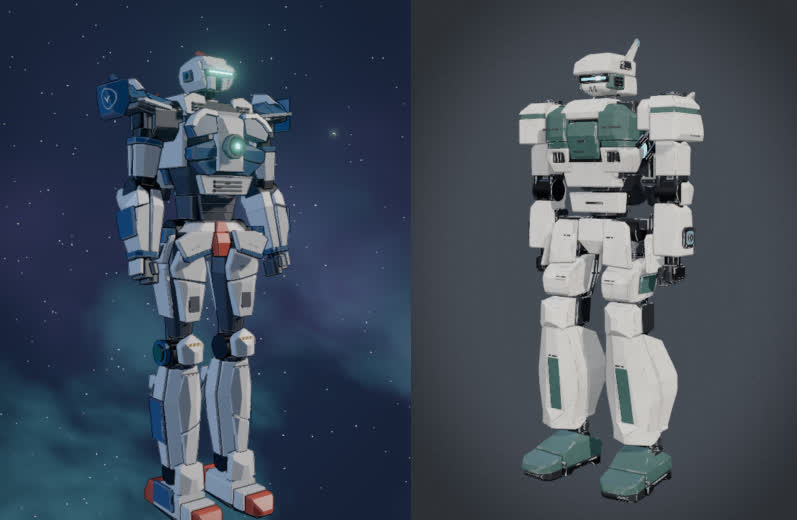
step_28_media_0.jpg read_file{"Path":"~/.gemini/antigravity-cli/brain/cea9ec26-a0ce-4401-a5d2-36df51bb07b3/scratch/reflect_imgs/img_1.jpeg"}
input
{ "Path": "~/.gemini/antigravity-cli/brain/cea9ec26-a0ce-4401-a5d2-36df51bb07b3/scratch/reflect_imgs/img_1.jpeg" }result, 1 line
Showing binary file of type image/jpeg
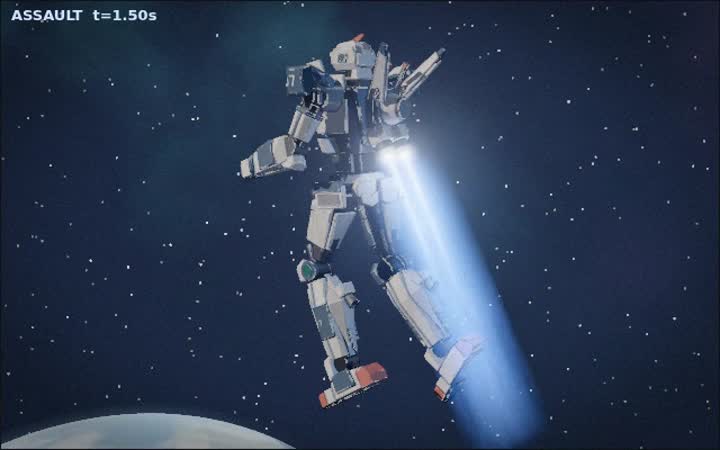
step_29_media_0.jpg read_file{"Path":"~/.gemini/antigravity-cli/brain/cea9ec26-a0ce-4401-a5d2-36df51bb07b3/scratch/reflect_imgs/img_2.jpeg"}
input
{ "Path": "~/.gemini/antigravity-cli/brain/cea9ec26-a0ce-4401-a5d2-36df51bb07b3/scratch/reflect_imgs/img_2.jpeg" }result, 1 line
Showing binary file of type image/jpeg
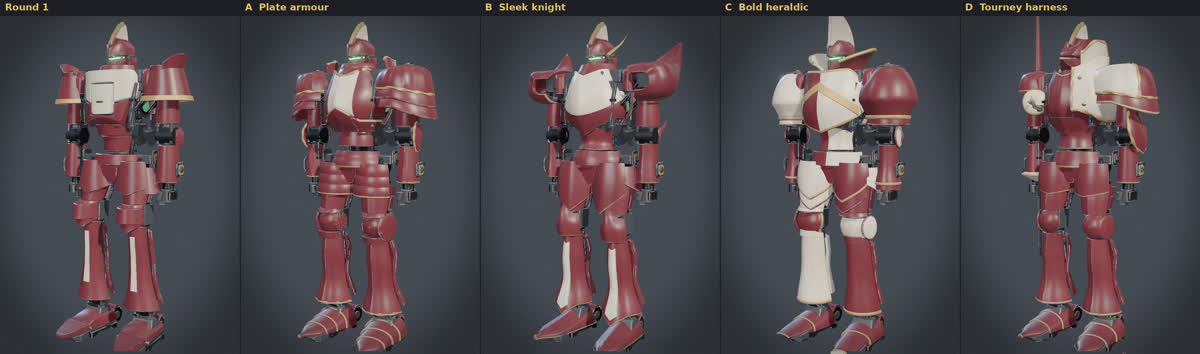
step_30_media_0.jpg read_file{"Path":"~/work/sortie/docs/study-atelier.md"}
input
{ "Path": "~/work/sortie/docs/study-atelier.md" }result, 291 lines
Showing lines 1-290 of 290
1: # Study: knightly frames for the houses' atelier
2:
3: > **Status 2026-11-08: parked.** The findings are useful, the rules are guessed and don't bind the one-mech restart. See [handbook.md](handbook.md).
4:
5: What makes a knight's machine read as one, measured, and what the atelier took from it. Read
6: 2026-10-28. References are for study only: images stay in review/out/atelier (gitignored), nothing
7: here is copied, sources are linked below. Method as in docs/study-proportions.md.
8:
9: ## Method
10:
11: - **References.** Near front photos of plastic kits on a plain ground: Gyan (MG), Schwalbe Graze
12:   (1/100), Kimaris (HG), Bael (HG), Vidar (HG), Epyon (MG). The knightmare line art and settei already
13:   read for docs/light-frames.md (Gloucester, Lancelot, Vincent, Sutherland), for principles only:
14:   they are a 4.4 m class on wheel feet. Escaflowne's guymelefs and Five Star Stories mortar headds
15:   had no usable front photos on the sites that load here.
16: - **Readings.** Fractions of the crown height (the helmet top, crests and spikes skipped), heights up
17:   from the sole. Read by eye on a pixel grid, plus or minus .03: these are small kits shot close, and
18:   shields, wings and tails hide edges. Ratios between designs are safer than any one number.
19: - **Ours.** Read off the lab model in Blender with the same definitions: the helm top, the faceplate's
20:   chin, the pauldron tops (flange included), the plates' widths, the pelvis block's underside for the
21:   crotch, the shin joint for the knee. Leg widths from the flat front silhouette (`?sil=1`).
22:
23: ## Ratios
24:
25: | Ratio | Gyan | Schwalbe | Kimaris | Bael | Vidar | Epyon | Knight range | Pattern medium |
26: |---|---|---|---|---|---|---|---|---|
27: | Head height | .16 | .13 | .11 | .10 | .08 | .12 | .08 to .13 | .10 |
28: | Chin below the pauldron tops | .09 | .09 | .08 | .08 | .05 | 0 | .05 to .09 | 0 |
29: | Shoulder span | .50 | .63 | .59 | .53 | .51 | .52 | .50 to .63 | .44 |
30: | Chest width | .28 | .24 | .21 | .24 | .19 | .28 | .19 to .28 | .23 |
31: | Waist width | .16 | .12 | .12 | .15 | .11 | .14 | .11 to .16 | .145 |
32: | Skirt width | .30 | .40 | .30 | .28 | .30 | .30 | .28 to .40 | .28 |
33: | Crotch | .47 | .55 | .49 | .50 | .53 | .47 | .47 to .55 | .55 |
34: | Knee joint | .35 | .41 | .43 | .45 | .42 | .40 | .35 to .45 | .39 |
35: | Lower leg, widest | .17 | .10 | .25 | .12 | .20 | .22 | .10 to .25 | .126 |
36: | Lower leg widest at | .13 | .15 | .15 | .10 | .35 | .15 | low, .10 to .15 | .24 |
37: | Hands | .47 | .53 | .49 | .50 | .55 | .52 | .47 to .55 | .475 |
38:
39: The Gyan's head counts its conical helm, the spike above it skipped. The Schwalbe's thighs carry
40: thruster blocks (.19 wide), so its lower leg reads narrower than its thigh. The Vidar's widest lower
41: leg is its thruster pods high on the shin.
42:
43: The knightmares (docs/light-frames.md) agree on the top half: shoulders .48 to .52 through pauldrons,
44: not chest, waist .14 to .17, head .11 to .12 with the crest. Their knee is low (.28 to .30) because of
45: the wheel feet, so their legs are not used here.
46:
47: ## Principles
48:
49: In our words, for a knight's machine of the standard class.
50:
51: - **Wide through the pauldrons, narrow through the body.** The shoulder span runs a fifth wider than
52:   a line mech's (.50 to .63 against .44), reached with big pauldrons standing out from a chest no
53:   wider than the line mech's. The pauldrons, not the chest, set the width.
54: - **The head sits down between them.** The chin is .05 to .09 below the pauldron tops. The helm is
55:   small, the crest or spike gives it the height. A knight's head never stands clear of its shoulders.
56: - **A pinched waist and a flaring skirt.** Waist .11 to .16, the skirt flaring out below it: an hourglass
57:   from the front, where the line mech is a column.
58: - **Long lower legs, little thigh.** The knee joint sits at .40 to .45 and the skirt hangs to near the
59:   knee, so a tenth of the height or less of thigh shows. The lower leg is the leg.
60: - **The lower leg flares at the ankle.** Gyan, Kimaris and Epyon widen into a bell or a greave over the
61:   foot, widest at .10 to .15, where the line mech is widest at mid shin. Bael keeps a slim greave.
62: - **Breakers at the top.** Swept up pauldron tips, a crest, a spike: the outline above the shoulders
63:   is busier than the line mech's, the outline below the waist plainer.
64: - **Round shells.** The plates curve: round pauldrons, curved greaves, a rounded breastplate. One
65:   smooth curve per plate, not facets.
66:
67: ## What the atelier took
68:
69: Its stance (`makers/atelier.stance`, atelier builds only) is the line mech's `proportion` with its own
70: numbers, plus a narrower stance:
71:
72: | Ratio | Light | Medium | Heavy | Pattern medium |
73: |---|---|---|---|---|
74: | Crown height | 17.2 m | 17.2 m | 17.2 m | 16.9 m |
75: | Crest top | 1.06 | 1.07 | 1.08 | antenna |
76: | Head height | .097 | .097 | .097 | .10 |
77: | Chin below the pauldron tops | .03 | .04 | .05 | 0 |
78: | Shoulder span | .48 | .54 | .58 | .44 |
79: | Chest width | .21 | .23 | .27 | .23 |
80: | Waist width | .11 | .115 | .14 | .145 |
81: | Crotch | .55 | .55 | .55 | .55 |
82: | Knee joint | .43 | .43 | .43 | .39 |
83: | Thigh width | .077 | .081 | under the tassets | .095 |
84: | Lower leg, widest | .121 | .137 | .151 | .126 |
85: | Lower leg widest at | .13 | .135 | .135 | .24 |
86: | Hands | .47 | .47 | .47 | .475 |
87:
88: - The crotch stays at the line mech's .55: the shared frame's torso sets it, and a lower crotch would
89:   squeeze the thigh to nothing. The long leg comes from the knee instead.
90: - Shoulders move out .25 like the pattern's, the span comes from the pauldron flare. The grades differ
91:   most here: the light's span is the pattern's plus a tenth, the heavy's a third.
92: - The waist pinches on the light and medium and fills out on the heavy, so the castellan reads by its
93:   body, not only by its shield.
94: - Feet .28 out from under the hips, not .4: a narrower stance.
95: - The helm is drawn round the frame's head block and the whole head seated .72 lower, between the
96:   pauldron flanges.
97:
98: ## Appeal: what round 1 missed
99:
100: The owner's verdict on round 1: the shape is right, the machine is bland. The silhouette held (flared
101: pauldrons, crest, pinched waist, bell greaves). The surfaces failed. Read against museum harness
102: (the Met's gothic, Maximilian and Greenwich armours, links below) and the kits above:
103:
104: - **Compound curves.** Round 1 made every plate a cone or a cylinder of even thickness: the pauldrons
105:   read as upturned flowerpots, the greaves as tubes, the breastplate as a card. Plate armour is domed in
106:   two directions at once: a pauldron is a bowl over the shoulder, a breastplate swells forward low on the
107:   chest (the pigeon breast) and draws in to the waist, a greave swells over the calf and narrows at the
108:   ankle. A curve down the plate catches a moving highlight, a straight one does not.
109: - **Edges.** Harness reads through its edges: rolled or roped borders, a medial ridge down the breast,
110:   greave and cuisse, flutes fanning across a plate. They catch light where a flat sheet has none.
111:   Too many of them flatten the hierarchy again: gold on every rim made A's first build read as stripes.
112:   Gold on the main hems only, the rest rolled in the plate's own colour.
113: - **Hierarchy and layering.** One hero shape per machine (the pauldron, or the crest and collar), then
114:   supporting shapes at the hips and knees, then small ones. Overlapping lames, a plackart over the breast,
115:   fans on the couters and poleyns give big, medium and small shapes and shadow lines between them.
116: - **Value.** Dark wine on a dark grey frame was one value. The frame must sit a clear step from the wine,
117:   ivory must come in deliberate masses, and the paint needs a sheen so the curves show. A matte look
118:   hides exactly the curvature the plates now have.
119: - **A face, not a hatch.** A rectangular hatch in the breast reads as an appliance panel. The hatch should
120:   be a design line of the plate: a medial panel between two seams, the field above a V, the whole shield.
121: - **Thigh.** With the knee at .43 a tenth of a metre of thigh showed. The board puts the knee at .40 and
122:   gives the thigh a cuisse of its own, so the leg reads as thigh, knee, greave.
123: - **Grades by role.** Grades that differ by thickness and a few add-ons look alike at range. A house
124:   knight's grades are roles: a lean duellist, a line knight, a castellan. They differ in proportion,
125:   coverage and hero element (docs/sizes.md reading distances).
126:
127: ## House lines
128:
129: The owner on round 2's board: all four directions distinct and good, keep them all. The atelier builds to
130: order per house (docs/manufacturers.md), so the four directions are four lines of the one maker, kept
131: apart on purpose. Working names:
132:
133: | Line | Lab | Idea | Joint covers |
134: |---|---|---|---|
135: | Harness (A) | `lab_atelier_a` | gothic and Maximilian plate: fluted domes over lames, a pigeon breast under a fluted plackart, lamed tassets, fanned couters and poleyns, roped gold on the main hems | quilt, mail fauld |
136: | Estoc (B) | `lab_atelier_b` | few smooth shapes ending in points: leaf pauldrons swept up behind, a keeled breast, a corset waist, blade tassets, spiked couters, pointed knee guards | bellows |
137: | Blazon (C) | `lab_atelier_c` | big heraldic shapes painted per pale and counterchanged: round pauldrons, a high collar, a fan crest, a heater shield breast with a gold chevron | quilt, mail fauld |
138: | Tilt (D) | `lab_atelier_d` | lopsided tourney harness: a grandguard over the left breast and pauldron, a volant, a pasguard, a small right pauldron with a besagew, a lance, a frog mouth great helm | quilt, mail fauld |
139:
140: Each lab holds the line in three grades, slot1 light, slot2 medium, slot3 heavy:
141: `/?view=lab_atelier_c&only=slot2&tx=20&palette=houses&bg=studio`. Round 1's medium is `lab_atelier` slot2.
142: The shared knightkit sheets (`kit/lab/knightkit.py`) make domed plates, rolled and roped rims, ridges and
143: flutes, the layered lames and bolted add-ons of the grades, and the joint covers. The knee sits at .41 on the
144: light, .40 on the medium and .39 on the heavy.
145:
146: What the critique found on round 2's board (two rounds, Codex): Harness the most armourer made up close but
147: the most familiar, Estoc the cleanest foundation, Blazon the clearest identity at 2 km and 300 m, Tilt the
148: strongest story but the most dependent on its lance. Blazon's two colour read comes from assigning accent to
149: half the plates, against the 70/20 rule in docs/visual-language.md, so a house that picks it accepts that.
150: All four share the frame's limb lengths and stance, so the lines differ most in the top half.
151:
152: The houses' palette went with it: the wine a step lighter and lacquered (a palette `lacquer` keeps its
153: sheen under the matte field look), the frame a darker, matte steel, so the plates and the joint covers keep
154: a value step in shade.
155:
156: **Tilt's helm.** Round 2's helm (the atelier prow helm under a frog mouth crown) read as weird. Tilt now has a
157: helm of its own: a barrel great helm with a flat domed top and a gold cross brace, a keeled bevor drawn
158: forward into a prow, the sight a narrow dark slot between the bevor's lip and the crown, breaths on the right
159: cheek, studs where it bolts to the breast. Plain on the light, crested on the medium, a taller crest and a
160: bolted brow plate on the heavy.
161:
162: ## The frame peeking out
163:
164: The owner on round 2's grades: why is the inner frame peeking out? The rule stays (the shared frame shows at
165: the joints), but the common pattern's boxy grey skeleton read as scaffolding behind a costume. Real harness
166: never shows the man: mail and an arming doublet fill every gap. So the atelier dresses the joints in a soft
167: layer in the frame colour (docs/visual-language.md, Joint covers):
168:
169: - A quilted or bellows roll round the waist, gussets at the armpits over the shoulder rams, rolls at the
170:   elbows (in two halves, so they can bend), the neck, the hips, and on the heavy the wrists and ankles.
171: - A fauld at the hips in flat hanging sections broken at each leg, mail on Harness, Blazon and Tilt.
172: - Flat pads behind the knees with shallow folds only in the bend, over the knee rams. Never a ring in front:
173:   the poleyn is the front.
174: - An arming sleeve on the light's bare upper arm, under its cap.
175: - A quiet quilt under the cuisses, where the thigh's gap between front and back plates is not a joint.
176:
177: Coverage by grade: the light shows its elbows, knees and neck and covers only the accidental gaps (waist,
178: bare upper arm, behind the hips and knees, the armpits), the medium covers most of the frame, the heavy
179: nearly all of it. Lessons from the critique: covers read as tyres, hoses or inflated shorts when they are
180: rings with deep round folds, so they stay flat, shallow and broken up. Still showing on every line: the
181: frame's horizontal shoulder bars and the outer thigh rails, which are shared frame geometry.
182:
183: ## Grades by plate count
184:
185: The owner on the first grade sketch: a heavier grade should carry more armour, not only bulkier armour,
186: an increase in intricacy. Read against light and heavy fits of one base:
187:
188: - **Kits.** MG Gundam ver 2.0 against MG Full Armor Gundam, HG Kimaris against the 1/100 Kimaris Trooper,
189:   HG Graze against the Graze Ritter (and the Graze Ein).
190: - **Harness.** The Met's light cavalry armour (ca. 1510), half armour (ca. 1510 to 20), three quarter armour
191:   (ca. 1525), field armour (ca. 1525), full harness (ca. 1520) and armour for the joust of peace (ca. 1500).
192:
193: Plates per side by region, separate plate pieces read by eye on the photos (plus or minus 2, rims, bolts
194: and weapons not counted), and the most plates stacked over one point:
195:
196: | Fit | Shoulder | Chest and waist | Hips | Thigh | Lower leg | Total | Layers |
197: |---|---|---|---|---|---|---|---|
198: | Gundam | 1 | 3 | 3 | 1 | 3 | 11 | 1 |
199: | Full Armor Gundam | 2 | 6 | 6 | 2 | 5 | 21 | 2 |
200: | Graze | 1 | 2 | 3 | 1 | 2 | 9 | 1 |
201: | Graze Ritter | 2 | 3 | 4 | 1 | 3 | 13 | 1 to 2 |
202: | Kimaris | 1 | 3 | 4 | 1 | 3 | 12 | 1 |
203: | Kimaris Trooper | 1 | 3 | 6 | 1 | 3 | 14, plus shield and rear unit | 2 at the hips |
204: | Light cavalry harness | 7 | 4 | 0 | 0 | 0 | 11 | 1 |
205: | Half armour | 6 | 5 | 4 | 0 | 0 | 15 | 1 |
206: | Three quarter armour | 6 | 5 | 8 | 3 | 0 | 22 | 1 |
207: | Field armour | 6 | 6 | 5 | 4 | 9 | 30 | 2 (plackart) |
208: | Joust of peace | 6 | 7 | 5 | 0 | 0 | 18, upper body | 3 on the left |
209:
210: - **Heavy fits add plates, not thickness.** The Full Armor Gundam keeps the base plates and bolts a second
211:   set over them: twice the pieces, two layers, the base showing at the edges of the add-ons. The Kimaris
212:   Trooper and the Graze Ritter add lames and skirts more than they thicken anything.
213: - **Harness grows by coverage first, then by layers.** Light harness covers the upper body in many small
214:   lames and leaves the legs bare. Each heavier fit covers more of the body (tassets to the knee, then
215:   cuisses, greaves and sabatons), then reinforces where it is struck: a plackart over the breast, a
216:   grandguard over that on the joust's left side.
217: - **A step is roughly half again to twice the plates**, and a heavy fit adds a second layer at the
218:   shoulders, the chest, the hips and the shins. Edges grow with the plates: every added lame or add-on
219:   brings its own rim, so rims climb faster than plates.
220:
221: Every line's grades, counted on the built models the same way (one side and the centre line, rims, studs and
222: covers apart, Tilt's right side, which differs, not counted):
223:
224: | Line | Light plates | Medium | Heavy | Step | Rims light, medium, heavy | Covers |
225: |---|---|---|---|---|---|---|
226: | Harness | 26 | 48 | 73 | 1 : 1.8 : 2.8 | 19, 41, 76 | 7, 11, 13 |
227: | Estoc | 25 | 37 | 48 | 1 : 1.5 : 1.9 | 10, 15, 28 | 7, 11, 13 |
228: | Blazon | 26 | 44 | 73 | 1 : 1.7 : 2.8 | 11, 20, 46 | 7, 11, 13 |
229: | Tilt | 24 | 38 | 53 | 1 : 1.6 : 2.2 | 16, 28, 47 | 7, 11, 13 |
230:
231: The light is about a plate per segment with an arming sleeve under a bare cap. The medium puts a lame or a
232: wing on every main plate: a lame under the pauldron, the tasset, the cuisse and over the greave, a fan at the
233: elbow, a wing at the knee, cheek guards on the helm. The heavy stacks lames where the medium has one, bolts
234: add-ons over the cuisses, greaves, breast and vambraces (heater shaped and counterchanged on Blazon, fluted on
235: Harness, blades on Estoc, a bigger grandguard on Tilt), adds a bevor to the helm and plates over the pack's
236: tanks, and puts a rim on every hem. Estoc steps least in count on purpose: its heavy puts the extra mass into
237: one great leaf over a long mantle and keeps its surfaces smooth, since fragmenting them would turn it into
238: Harness. Each line keeps its own hero as it grows: Harness its lames, Estoc its leaf, Blazon its heraldic
239: fields and ailettes, Tilt its grandguard.
240:
241: ### The rule
242:
243: Now in docs/visual-language.md (Plates), for every maker, the common pattern included, with coverage by grade
244: and joint covers beside it:
245:
246: > **Weight grade is plate count and layering, then thickness.** Each grade up carries roughly half again
247: > to twice the plates of the one below, in the same motif. Light: about one plate per segment, the frame
248: > showing between them. Medium: a lame, a wing or a cap added to every main plate. Heavy: stacked lames
249: > where the medium has one, add-on plates bolted over the base plates (a second layer at the shoulders,
250: > chest, hips and shins) and the rims, rivets and edges that come with them. Bulk alone does not make a
251: > grade: a heavy that is a thick medium reads as the same machine at 300 m.
252:
253:
254: ## Sources
255:
256: Kit reviews (photos on a plain ground):
257:
258: - Gyan, MG YMS-15: https://www.dalong.net/reviews/mg/m90/m90_p_e.htm
259: - Epyon, MG OZ-13MS: https://www.dalong.net/reviews/mg/m145/m145_p_e.htm
260: - Schwalbe Graze, 1/100: https://www.dalong.net/reviews/ib/ib103/ib103_p_e.htm
261: - Kimaris, HG: https://www.dalong.net/reviews/ib/ibh11/ibh11_p_e.htm
262: - Vidar, HG: https://www.dalong.net/reviews/ib/ibh27/ibh27_p_e.htm
263: - Bael, HG: https://www.dalong.net/reviews/ib/ibh36/ibh36_p_e.htm
264:
265: Also consulted, not measured: the Kimaris Trooper (ib109) and MG Vidar (m224) reviews, and the
266: knightmare board already in review/out/refs/geass (docs/light-frames.md).
267:
268: Light and heavy fits (kit reviews):
269:
270: - MG Gundam ver 2.0: https://www.dalong.net/reviews/mg/m111/m111_p_e.htm
271: - MG Full Armor Gundam: https://www.dalong.net/reviews/mg/m133/m133_p_e.htm
272: - HG Graze (ground type): https://www.dalong.net/reviews/cg/cgh143/cgh143_p_e.htm
273: - HG Graze Ritter: https://www.dalong.net/reviews/cg/cgh117/cgh117_p_e.htm
274: - HG Graze Ein: https://www.dalong.net/reviews/ib/ibh18/ibh18_p_e.htm
275: - 1/100 Kimaris Trooper: https://www.dalong.net/reviews/ib/ib109/ib109_p_e.htm
276:
277: Historical harness, the Met's open access collection (public domain photos, read for principles):
278:
279: - Gothic armour, late 15th century: https://www.metmuseum.org/art/collection/search/23081
280: - Fluted armour, Nuremberg, ca. 1520: https://www.metmuseum.org/art/collection/search/24807
281: - Field armour, ca. 1525: https://www.metmuseum.org/art/collection/search/22001
282: - Garniture of Henry VIII, 1527: https://www.metmuseum.org/art/collection/search/22741
283: - Greenwich field armour, ca. 1587: https://www.metmuseum.org/art/collection/search/22138
284: - Pauldron, ca. 1525: https://www.metmuseum.org/art/collection/search/22302
285: - Light cavalry armour, ca. 1510: https://www.metmuseum.org/art/collection/search/22275
286: - Half armour, ca. 1510 to 20: https://www.metmuseum.org/art/collection/search/23090
287: - Three quarter armour, ca. 1525: https://www.metmuseum.org/art/collection/search/23199
288: - Armour for the joust of peace, ca. 1500: https://www.metmuseum.org/art/collection/search/35928
289: - Breastplates, ca. 1480 to 1545: https://www.metmuseum.org/art/collection/search/24826,
290:   https://www.metmuseum.org/art/collection/search/23040, https://www.metmuseum.org/art/collection/search/22408
read_file{"Path":"~/work/sortie/docs/visual-language.md"}
input
{ "Path": "~/work/sortie/docs/visual-language.md" }result, 144 lines
Showing lines 1-143 of 143
1: # Visual language
2:
3: > **Status 2026-11-08: parked.** Mostly guessed rules from the first maker rounds. They don't bind the one-mech restart. [handbook.md](handbook.md) says which are earned.
4:
5: How every frame in sortie is built and painted, so that makers look distinct, parts look like
6: they do something, and the whole roster looks like one world. Lessons come from
7: docs/study-phantom-brigade.md. Makers and factions from docs/manufacturers.md and the wiki.
8:
9: ## Three layers
10:
11: Every frame is three layers, built separately:
12:
13: 1. **Inner frame.** The machine. One per size class, shared by every maker.
14: 2. **Plates.** The armour. One shell per segment, made per maker family and weight grade.
15: 3. **Livery.** The paint, markings and bearings. Set by the faction or company that fields it,
16:    never by the maker.
17:
18: Cohesion comes from layer 1, identity from layer 2, allegiance from layer 3.
19:
20: ## Inner frame
21:
22: - One frame per size class (light, standard, heavy), carrying the 22 joint rig.
23: - Dark metal: the frame and joint roles. Never painted in livery colours.
24: - Mechanical and visible. Actuators and pistons at the hips and shoulders, joint housings at
25:   every joint, cable runs along the long bones.
26: - Shows at the neck, waist, shoulders, elbows, wrists, knees and ankles on every frame. The
27:   frame shows at the sides and back of each joint. The front of the knees and the back of the
28:   elbows get a cap, and the cockpit gets a hatch. Cuffs and collars may overlap the shoulder,
29:   neck, waist, wrist and ankle gaps in part.
30: - Carries the cockpit socket in the chest, the reactor bay behind it, and the standard mount
31:   pads (below).
32: - Finished from behind too: what shows between plates is a spine housing, closed back panels,
33:   covered mounts and cable runs in ducts, never a skeleton with holes.
34: - **Joint covers.** A plate family may dress the joints in a soft layer in the frame colour, as harness
35:   has mail and an arming doublet under it: bellows or quilted sleeves at the waist, armpits, elbows and
36:   neck, a hanging fauld at the hips broken at each leg, flat pads behind the knees. A gap between plates
37:   then reads as a deliberate shadow, not as machinery. Covers stay dark and shallow: no rings round the
38:   front of a joint, no folds deep enough to read as tyres or hoses. The frame's pistons and housings may
39:   still show at the sides and back of a joint. Each family styles its covers (quilt, bellows, mail) and
40:   every family's covers fit every frame (kit/lab/knightkit.py, joint_covers).
41:
42: ## Plates
43:
44: - One shell per segment, riding its own joint: head, chest, waist, pelvis, shoulder, upper arm,
45:   forearm, thigh, shin, foot (sabaton and heel spur), backpack, binders. Hands stay bare frame.
46: - Large flat faces, one chamfer width per family. Curves only where the maker's motif calls
47:   for them.
48: - Detail comes from the livery layer (stencils, panel markings), not from extra geometry.
49: - **No open shells.** A plate is a closed piece. Never hollow a shell so its inside shows, and a cut
50:   face gets a closing cap in plate or frame colour. The head is a closed piece on every grade.
51: - **Weight grade is plate count and layering, then thickness.** Each grade up carries roughly half again
52:   to twice the plates of the one below, in the same motif (docs/study-atelier.md, Grades by plate
53:   count). Bulk alone does not make a grade: a heavy that is a thick medium reads as the same machine at
54:   300 m. Every grade looks finished from every angle, the back included. The head and the back step up
55:   with the rest.
56:   - Light: about one plate per segment, thin, the frame showing between them. Still covers the front
57:     and the back of the torso, a rear skirt, the backs of the thighs and the calves.
58:   - Medium: a lame, a wing or a cap added to every main plate, a front and a back plate on each limb.
59:   - Heavy: stacked lames where the medium has one, add-on plates bolted over the base plates (a second
60:     layer at the shoulders, chest, hips and shins) and the rims, studs and edges that come with them.
61:     Gaps only at the joints, broader packs, a bevor and cheeks on the helm.
62: - **Coverage by grade.** Light shows its joints: the frame at the elbows, knees and neck, joint covers
63:   only where a gap would be accidental (the waist, bare upper arms, behind the hips and knees). Medium
64:   hides most of the frame: covers at the armpits, elbows, hips and neck too. Heavy closes almost
65:   everything: covers at the ankles and wrists as well, the frame only at the backs and sides of joints.
66: - Joint gaps: the frame or its covers show at the sides and back of each joint. Every grade caps the
67:   front of the knees and the back of the elbows (light small, heavy big and wrapping more) and
68:   armours the cockpit with a hatch.
69: - Any grade fits any frame of its size class. Mixing grades is normal and must still look
70:   intentional, so grades share the motif and the chamfer.
71:
72: ## Standard mount pads
73:
74: Every maker builds to the Administration's common pattern for mounts: the same pad shape at
75: the forearms (hand weapons), shoulders (shoulder weapons), backpack (thrusters) and hips
76: (holsters). The pad is part of the frame or plate and always reads the same. It ties makers
77: together and tells the player where weapons go.
78:
79: ## Function placement
80:
81: - Cockpit: a socket in the chest front, framed by the chest plate, ejects as a pod. An armoured
82:   hatch in plate colour covers the socket and leaves with the pod. The seam round it shows the
83:   pod outline. The houses' light frames put a core block cockpit at the back instead: a capsule on
84:   docking lugs that ejects whole, the breastplate closed over the socket.
85: - Sensors in the head. The head shape is the maker's strongest single mark.
86: - Reactor vents on the chest sides or the back, bigger on reactor house parts.
87: - Thrusters on the backpack and binders, verniers on the shins and shoulders.
88: - Weapons only on mount pads.
89:
90: ## Maker motifs
91:
92: Two or three silhouette moves per maker, held across every plate and grade. Everything else on
93: the plate stays plain.
94:
95: | Maker | Moves |
96: |---|---|
97: | Common pattern | Rectangles with one 45 degree clip on the outboard top corner. A recessed service band across each main plate. Flat, square, standard issue. |
98: | Commerce yards | Thick slabs with rounded bumper edges. Grab rails and tool sockets. Stacked box volumes. |
99: | Military arsenal | Steeply sloped faces. Overlapping lames on shoulders and thighs. Spaced armour with a visible gap. No rounded edges. |
100: | Houses' atelier | Built to order per house in four lines on one motif: plates domed in two directions (no straight cones or flat cards), rolled and roped rims, a crest on the helm, a small helm sunk between broad pauldrons, a pinched waist, long greaves flaring to a bell. Harness: gothic plate, fluted domes over lames. Estoc: few smooth shapes ending in points. Blazon: big heraldic shapes painted per pale. Tilt: lopsided tourney harness, a grandguard and a frog mouth great helm (docs/study-atelier.md). |
101: | Science works | Thin plates on open lattice. Sensor discs and field emitter rings. Asymmetry allowed. |
102: | Reactor house | Radiator fins and vent slats on every plate. Light in the seams. |
103: | Refitter | Other makers' plates with weld seams and refit plates bolted over. Mismatched on purpose. |
104: | The Foundry | One continuous shell, no visible frame (docs/factions.md). The one exception to the gap rule. |
105:
106: ## Livery
107:
108: - Set by the faction or company, applied through palette roles in `src/render/palette.ts`.
109:   A faction's frames always wear its livery, whoever made the plates.
110: - **Main** (field colour) about 70 percent of the plates, **accent** about 20, **trim** thin
111:   lines only.
112: - **Colour blocking.** Accent goes on in a few big blocks a plate family assigns by role, not
113:   scattered over small faces: the upper chest with the hatch, the boots, a panel on the back, a head
114:   detail. The line mechs get their character from this (the GM's red chest and boots on white, the
115:   Jegan's two greens). The collar and the pauldrons stay main, so the head and shoulders stand off the
116:   chest block. Every faction repaints the same roles, so the accent must keep a clear value step from
117:   main in every palette (the automatons' gunmetal against their black included).
118: - **Legs.** Accent on the legs only as long panels running down the leg (shin fronts, outer thighs) and
119:   as the boot. Never a band across the leg: the knee, the thigh's lower edge and the shin cuff stay
120:   main. A knee cap in accent reads as a band and cuts the leg in two (round 7). Long panels and boots
121:   keep the leg one mass and still carry the livery (round 8).
122: - **Stencil**: unit codes, pattern codes, service markings. A decal layer, separate from the
123:   plate geometry.
124: - **Bearings**: the faction's insignia on the left shoulder and the chest. A merc company's mark
125:   on the right shoulder. Every plate family provides the same anchor points so bearings land in
126:   the same places on every maker's plates.
127: - The frame stays dark metal in every livery. Plates must keep a clear value step from the
128:   frame. A dark livery lightens the frame role, a light livery darkens it.
129: - Mercs paint in company colours and may add the employer's band for a contract.
130:
131: ## Proportions
132:
133: Measured from line mechs in docs/study-proportions.md. For a plain standard class frame: head a
134: tenth of the height with the chin at the pauldron tops, shoulder span .45, crotch .54, knee joint
135: .39, so a short thigh under the skirt over a long shin. The lower leg is the widest part of the leg,
136: the feet as wide, the waist a block. Accent on the legs only as long panels and the boot, never a
137: band across them (Livery).
138:
139: ## Reading distances
140:
141: - 2 km: silhouette and size class.
142: - 300 m: maker motif and livery colours.
143: - 50 m: bearings, stencils, mount pads.