A 3D model pipeline, pushed by Gemini 4 Carbon
agent
+8:10reasoning
The image reveals a key distinction: the top row characters have hair, while the bottom row characters are bald. This suggests that hair presence or absence is a crucial visual determinant.
The analysis reveals two distinct visual characteristics. Lowmarch's hair appears textured with streaks, contrasting with the smooth, cel-shaded hair of Yin/Yang. Additionally, Yang's face displays a distinct shadow from temple to jaw, which is absent in Lowmarch, indicating a difference in skin lighting and shadow rendering.
read_file{"EndLine":495,"Path":"~/work/lowmarch/review/vroid-02/index.html","StartLine":350}
input
{ "EndLine": 495, "Path": "~/work/lowmarch/review/vroid-02/index.html", "StartLine": 350 }result, 147 lines
Showing lines 350-495 of 1737 350: // Cast shadows on skin, in screen space (the "depth offset" shadows of anime toon shaders): walk from this pixel 351: // toward the key light across the info pass already drawn; if the face (the jaw) or hair stands in front of that 352: // ray, this pixel is in its shadow. The shape is the caster's own outline as the camera sees it, at any angle. 353: float castShadow() { 354: vec2 uv = gl_FragCoord.xy / uCastRes, px = 1.0 / uCastRes; 355: float z0 = uCastNear + texture2D(tCastDepth, uv).x * (uCastFar - uCastNear); 356: float sxy = length(uKey.xy); 357: if (sxy < 0.05) return 0.0; 358: vec2 dir = uKey.xy / sxy; 359: float lz = uKey.z / sxy; // the ray's rise toward the camera per metre across 360: for (int s = 1; s <= 14; s++) { 361: float dm = float(s) * 0.003; // 3 mm steps across the screen, up to 4.2 cm 362: vec2 q = uv + dir * dm * uCastPpm * px; 363: vec4 ni = texture2D(tCastInfo, q); 364: if (ni.a < 0.5) continue; 365: int r = int(ni.r * 255.0 + 0.5); 366: if (r != 1 && r != 3 && r != 11) continue; // casters: the face (jaw, chin) and hair 367: float zq = uCastNear + texture2D(tCastDepth, q).x * (uCastFar - uCastNear); 368: float zr = z0 - lz * dm; 369: if (zq < zr - 0.004 && zq > zr - 0.20) return 1.0; 370: } 371: return 0.0; 372: } 373: varying vec3 vN; varying vec2 vUv; varying vec3 vView; varying vec3 vObj; varying float vEdge; varying vec4 vPlate; 374: ${HSV} 375: float hash(vec3 p) { p = fract(p * 0.3183099 + 0.1); p *= 17.0; return fract(p.x * p.y * p.z * (p.x + p.y + p.z)); } 376: float vnoise(vec3 x) { 377: vec3 i = floor(x), f = fract(x); f = f * f * (3.0 - 2.0 * f); 378: return mix(mix(mix(hash(i), hash(i + vec3(1,0,0)), f.x), mix(hash(i + vec3(0,1,0)), hash(i + vec3(1,1,0)), f.x), f.y), 379: mix(mix(hash(i + vec3(0,0,1)), hash(i + vec3(1,0,1)), f.x), mix(hash(i + vec3(0,1,1)), hash(i + vec3(1,1,1)), f.x), f.y), f.z); 380: } 381: float toward(float h, float target, float amt) { float d = target - h; d -= floor(d + 0.5); return fract(h + clamp(d, -amt, amt)); } 382: vec3 tone(vec3 base, float hue, float amt, float sMul, float vMul) { 383: vec3 h = rgb2hsv(base); 384: return hsv2rgb(vec3(toward(h.x, hue, amt), clamp(h.y * sMul, 0.0, 1.0), clamp(h.z * vMul, 0.0, 1.0))); 385: } 386: float st(float x, float t) { return smoothstep(t - 0.03, t + 0.03, x); } 387: // Steel and gold. Hard reflection bands (dark below the horizon, a dark core under a white streak) 388: // read well where the surface turns fast: rims, tubes, lames. On a broad plate the reflection 389: // barely changes, so a band there fills the whole plate (the blotches): bands fade by how sharply 390: // the surface curves (normal change per metre on screen), and broad plates get a soft tone that 391: // lightens up each outline plate (hgt: height in the plate 0..1, or -1 without plate data). 392: vec3 metal(bool gold, vec3 base, vec3 n, vec3 v, float lit, float hgt) { 393: vec3 r = reflect(-v, n); 394: float ry = r.y + (vnoise(vObj * vec3(3.0, 14.0, 3.0)) - 0.5) * 0.14; // jitter the bands along their length, not into blobs 395: float curv = length(fwidth(n)) / max(length(fwidth(vView)), 1e-5); 396: float sharp = smoothstep(5.0, 14.0, curv); 397: // a shaped plate's domes (over the bust, a crowned panel) turn the bands into closed rings: plates 398: // keep only a little of them and take a crisp highlight toward the light instead 399: if (hgt >= 0.0) sharp *= 0.25; else sharp = max(sharp, 0.3); 400: vec3 s0, s1, s2, s3; 401: if (!gold) { s0 = tone(base, 0.68, 0.10, 2.4, 0.32); s1 = tone(base, 0.68, 0.06, 1.7, 0.76); 402: s2 = tone(base, 0.12, 0.0, 0.8, 0.88); s3 = vec3(0.97, 0.96, 0.92); } 403: else { s0 = vec3(0.30, 0.20, 0.30); s1 = tone(base, 0.20, 0.03, 1.0, 0.72); s2 = base; s3 = tone(base, 0.16, 0.03, 0.5, 1.5); } 404: vec3 hard = mix(s0, s1, st(ry, -0.42)); // facing down: dark 405: hard = mix(hard, s2, st(ry, -0.08)); // facing us: the plate's own grey 406: hard = mix(hard, s0, st(ry, 0.36)); // dark core under the streak 407: hard = mix(hard, s3, st(ry, 0.47)); // the white streak 408: hard = mix(hard, s2 * 1.06, st(ry, 0.70)); 409: float k = smoothstep(-0.55, 0.30, r.y); // broad: darker toward the ground (no jitter: 410: if (hgt >= 0.0) k = clamp(k * 0.45 + hgt * 0.80 - 0.18, 0.0, 1.0); // on a flat plate it streaks) 411: else k = clamp(k * 0.6 + n.y * 0.35 + 0.05, 0.0, 1.0); // without plate data: lighter facing up 412: vec3 soft = mix(s1 * 0.9, s2, k); 413: float hl = dot(n, normalize(uKey + v)); // the key's highlight, a hard-edged shape 414: if (hgt >= 0.0) soft = mix(soft, mix(s2, s3, 0.6), st(hl, 0.955) * smoothstep(0.45, 0.8, hgt)); // the upper part only 415: vec3 col = mix(soft, hard, sharp); 416: return mix(col * 0.72 + s0 * 0.28, col, st(lit, 0.30)); 417: } 418: void main() { 419: vec4 tex = texture2D(uMap, vUv); 420: if (uAlpha == 1 && tex.a < 0.5) discard; 421: if (uAlpha == 2 && (tex.a < 0.5 || dot(tex.rgb, vec3(1.0 / 3.0)) >= 0.42)) discard; 422: if (uPass == 1) { gl_FragColor = uInfo; return; } 423: vec3 n = normalize(vN); if (!gl_FrontFacing) n = -n; 424: vec3 v = normalize(vView); 425: float lit = dot(n, uKey) * 0.5 + 0.5; 426: if (uShadeOnly == 1) lit = min(lit, 0.37); // shadow cards only ever darken skin, to a soft shade 427: else if (uCastOn == 1 && uKind == 1 && int(uInfo.x * 255.0 + 0.5) == 2 && castShadow() > 0.5) 428: lit = min(lit, 0.37); // body skin under the jaw's or the hair's shadow 429: float g1 = vnoise(vObj * 40.0), g2 = vnoise(vObj * 150.0); 430: vec3 col; 431: if (uKind == 0 || uKind == 5 || uKind == 6) { // cloth, leather, ground 432: vec3 hb = rgb2hsv(uBase); 433: bool cool = hb.x > 0.42 && hb.x < 0.86; 434: float sh = uKind == 5 ? 0.93 : (cool ? 0.70 : 0.96); 435: float li = cool ? 0.52 : 0.13; 436: vec3 c0 = tone(uBase, sh, 0.09, 1.12, 0.40), c1 = tone(uBase, sh, 0.05, 1.08, 0.64); 437: vec3 c3 = tone(uBase, li, 0.03, 0.80, 1.20); 438: float l = lit + (g1 - 0.5) * uGrain - (uKind == 6 ? 0.22 : 0.0); // ground: a flat top sits at the base colour 439: col = mix(c0, c1, st(l, 0.30)); col = mix(col, uBase, st(l, 0.50)); col = mix(col, c3, st(l, 0.91)); 440: if (uKind == 5) col *= 0.965 + 0.07 * vnoise(vObj * 22.0); // mottled leather 441: } else if (uKind == 1) { // skin: pale, nearly unshaded from the front 442: vec3 sL = vec3(0.973, 0.882, 0.835), sS = vec3(0.776, 0.659, 0.608), sC = vec3(0.451, 0.322, 0.310); 443: if (uSkinRamp == 1) { sL = uSkinL; sS = uSkinS; sC = uSkinC; } // the character's tone, designed per tone 444: col = mix(sC, sS, st(lit, 0.20)); col = mix(col, sL, st(lit, 0.38)); 445: if (uFaceTex == 1) col *= clamp(tex.rgb / uSkinRef, 0.55, 1.05); 446: if (uFaceTex == 1 && vUv.x > 0.38 && vUv.x < 0.62 && vUv.y > 0.68 && vUv.y < 0.84) { 447: // the closed mouth: VRoid paints a 2-texel line that the clamp above leaves faint; ink it and widen it 448: // (the darkest of a few taps), so it follows the mouth's shape keys as a drawn line 449: float d = 0.0, sl = dot(uSkinRef, vec3(1.0 / 3.0)); 450: for (int k = -2; k <= 2; k++) for (int j = -1; j <= 1; j++) { 451: vec3 t = texture2D(uMap, vUv + vec2(float(j) * 1.2, float(k) * 0.8) / 512.0).rgb; 452: d = max(d, 1.0 - dot(t, vec3(1.0 / 3.0)) / sl); 453: } 454: float taper = 1.0 - 0.55 * smoothstep(0.035, 0.065, abs(vUv.x - 0.5)); // a brush stroke: lighter at the corners 455: col = mix(col, vec3(0.42, 0.22, 0.22), smoothstep(0.10, 0.22, d) * taper); 456: } 457: if (uSkinRamp == 0) col *= uSkinTone; // older builds: one tint over the light skin 458: } else if (uKind == 2) { // hair: four even bands, hard strand highlights 459: float strand = dot(tex.rgb, vec3(1.0 / 3.0)); 460: vec3 c0 = tone(uBase, 0.72, 0.07, 1.10, 0.45), c1 = tone(uBase, 0.72, 0.035, 1.05, 0.68); 461: vec3 c2 = tone(uBase, 0.56, 0.02, 0.92, 1.10), c3 = tone(uBase, 0.56, 0.03, 0.55, 1.42); 462: float l = lit + (strand - 0.6) * 0.12; 463: col = mix(c0, c1, st(l, 0.40)); col = mix(col, uBase, st(l, 0.56)); col = mix(col, c2, st(l, 0.84)); 464: float sp = dot(n, normalize(uKey + v)) + (strand - 0.6) * 0.18; 465: col = mix(col, c3, st(sp, 0.90) * (1.0 - st(sp, 0.985))); 466: } else if (uKind == 3 || uKind == 4) { // steel, gold 467: bool plate = vPlate.x > 0.5; 468: float e = vPlate.y, w = vPlate.z; 469: bool gilt = uKind == 4 || (plate && w > 0.0 && e < w); // an outline plate's gold border 470: col = metal(gilt, gilt && uKind == 3 ? uGold : uBase, n, v, lit, plate ? vPlate.w : -1.0); 471: if (plate && w > 0.0) { // engraved lines: one inside the border, one on its seam 472: float aa = fwidth(e) * 1.2 + 1e-5; 473: float l1 = 1.0 - smoothstep(0.0010, 0.0010 + aa, abs(e - (w + 0.0050))); 474: float l2 = 1.0 - smoothstep(0.0006, 0.0006 + aa, abs(e - w)); 475: col = mix(col, col * 0.42, max(l1, l2 * 0.8)); 476: } 477: } else if (uKind == 7) { // iris 478: float l = dot(tex.rgb, vec3(1.0 / 3.0)); 479: col = l < 0.3 ? mix(uEye[0], uEye[1], l / 0.3) : mix(uEye[1], uEye[2], clamp((l - 0.3) / 0.6, 0.0, 1.0)); 480: } else if (uKind == 8) { col = tex.rgb; } 481: else if (uKind == 10) { // the open mouth: VRoid's map read as three parts, 482: float lum = dot(tex.rgb, vec3(1.0 / 3.0)); // teeth (white), tongue (its light pink) and the 483: col = mix(vec3(0.36, 0.11, 0.14), vec3(0.78, 0.38, 0.42), smoothstep(0.53, 0.58, tex.g)); // dark inside 484: col = mix(col, vec3(0.98, 0.96, 0.95), smoothstep(0.80, 0.86, lum)); 485: } 486: else { col = uFlat; } 487: if (vPlate.x > 0.5 && vPlate.z > 0.0 && uKind != 3 && uKind != 4) { // a cloth outline piece's gold border, 488: float e = vPlate.y, w = vPlate.z, aa = fwidth(e) * 1.2 + 1e-5; // and a fine gold line inside it 489: float band = 1.0 - smoothstep(w - aa, w, e); 490: float l1 = 1.0 - smoothstep(0.0006, 0.0006 + aa, abs(e - (w + 0.0040))); 491: col = mix(col, metal(true, uGold, n, v, lit, -1.0), max(band, l1 * 0.9)); 492: } 493: if (uDecal == 1) { // a design in the piece's own coordinates: 494: vec3 dm = tex.rgb; // R paint, G groove, B gold inlay 495: float pm = smoothstep(0.3, 0.7, dm.r), gm = smoothstep(0.3, 0.7, dm.g), au = smoothstep(0.3, 0.7, dm.b);read_file{"EndLine":610,"Path":"~/work/lowmarch/review/vroid-02/index.html","StartLine":495}
input
{ "EndLine": 610, "Path": "~/work/lowmarch/review/vroid-02/index.html", "StartLine": 495 }result, 117 lines
Showing lines 495-610 of 1737
495:       float pm = smoothstep(0.3, 0.7, dm.r), gm = smoothstep(0.3, 0.7, dm.g), au = smoothstep(0.3, 0.7, dm.b);
496:       if (au > 0.0) col = mix(col, metal(true, uGold, n, v, lit, -1.0), au);
497:       if (pm > 0.0) {
498:         vec3 pc = mix(tone(uMotif, 0.70, 0.05, 1.10, 0.62), uMotif, st(lit, 0.42));
499:         col = mix(col, mix(pc, tone(uMotif, 0.56, 0.03, 0.8, 1.25), st(lit, 0.92)), pm);
500:       }
501:       if (gm > 0.0) col = mix(col, col * 0.30, gm);
502:     }
503:     if (vEdge > 0.5) {                                                 // the cloth's border band
504:       vec3 gd = tone(uBand, 0.20, 0.03, 1.0, 0.72);
505:       col = mix(gd, uBand, st(lit, 0.45)); col = mix(col, tone(uBand, 0.16, 0.03, 0.5, 1.45), st(lit, 0.85));
506:     }
507:     if (uKind <= 6) {
508:       vec3 grade = mix(uAmbient, uKeyCol, st(lit, 0.55));
509:       col *= uKind == 1 && uSkinRamp == 1 ? mix(vec3(1.0), grade, 0.3) : grade;   // a designed skin ramp takes less of it
510:       float fr = pow(1.0 - max(dot(n, v), 0.0), 4.0);
511:       float back = clamp(dot(n, normalize(vec3(0.55, 0.45, -0.35))), 0.0, 1.0);
512:       col += uRimCol * fr * smoothstep(0.1, 0.5, back);
513:       if (uKind != 1) col *= 1.0 + (g2 - 0.5) * 0.06;
514:     }
515:     gl_FragColor = vec4(clamp(col, 0.0, 1.0), 1.0);
516:   }`;
517: const PAINT_COMP = `
518:   uniform sampler2D tColor; uniform sampler2D tInfo; uniform sampler2D tDepth; uniform vec2 uRes;
519:   uniform float uNear; uniform float uFar; uniform float uGap; uniform float uSil; uniform float uInner; uniform float uPpm;
520:   ${HSV}
521:   float z(vec2 p) { return uNear + texture2D(tDepth, p).x * (uFar - uNear); }
522:   int rid(vec4 i) { return int(i.r * 255.0 + 0.5); }
523:   float pid(vec4 i) { return floor(i.g * 255.0 + 0.5) + floor(i.b * 255.0 + 0.5) * 256.0; }
524:   vec3 ink(vec3 c) { vec3 h = rgb2hsv(c); return hsv2rgb(vec3(h.x, clamp(h.y, 0.20, 0.45), 0.19)); }
525:   // How far (px) the mouth's opening runs from this pixel in direction d (2 px steps, up to 128 px).
526:   float mouthRun(vec2 uv, vec2 d) {
527:     float n = 0.0;
528:     for (int s = 1; s <= 64; s++) { vec4 a = texture2D(tInfo, uv + d * float(2 * s)); if (a.a < 0.5 || rid(a) != 9) break; n += 2.0; }
529:     return n;
530:   }
531:   // Brows drawn over the bangs: where hair lies just above or below the stroke, the brow is seen through the hair,
532:   // so it takes some of the hair's colour and doesn't sit on it like a sticker.
533:   vec3 browOverHair(vec2 uv, vec2 px, vec3 col) {
534:     float d = 3.5 * uSil;
535:     vec4 a = texture2D(tInfo, uv + vec2(0.0, d) * px), b = texture2D(tInfo, uv - vec2(0.0, d) * px);
536:     bool ha = a.a > 0.5 && (rid(a) == 3 || rid(a) == 11), hb = b.a > 0.5 && (rid(b) == 3 || rid(b) == 11);
537:     if (!(ha || hb)) return col;
538:     vec3 hc = ha ? texture2D(tColor, uv + vec2(0.0, d) * px).rgb : texture2D(tColor, uv - vec2(0.0, d) * px).rgb;
539:     return mix(col, hc * 0.80, ha && hb ? 0.68 : 0.34);
540:   }
541:   void main() {
542:     vec2 uv = gl_FragCoord.xy / uRes, px = 1.0 / uRes;
543:     vec4 inf = texture2D(tInfo, uv);
544:     if (inf.a < 0.5) {                                          // outer line: grow the silhouette outward
545:       vec4 best = vec4(0.0); vec2 bq = uv;
546:       for (int k = 0; k < 12; k++) {
547:         float a = float(k) * 0.5236;
548:         for (int s = 1; s <= 2; s++) {
549:           vec2 q = uv + vec2(cos(a), sin(a)) * uSil * float(s) * 0.5 * px;
550:           vec4 ni = texture2D(tInfo, q);
551:           if (ni.a > 0.5) { best = ni; bq = q; }
552:         }
553:       }
554:       if (best.a > 0.5) {
555:         int r = rid(best);
556:         if (r >= 4 && r <= 7) { gl_FragColor = vec4(0.0); return; }
557:         gl_FragColor = vec4(ink(texture2D(tColor, bq).rgb), 1.0); return;
558:       }
559:       gl_FragColor = vec4(0.0); return;
560:     }
561:     vec3 col = texture2D(tColor, uv).rgb; int r0 = rid(inf); float p0 = pid(inf); float z0 = z(uv);
562:     bool feature = r0 >= 4 && r0 <= 9;
563:     if (r0 == 9) {                                              // the open mouth's rim: a lip line where it meets the face
564:       for (int k = 0; k < 8; k++) {
565:         float a = float(k) * 0.785398;
566:         vec2 q = uv + vec2(cos(a), sin(a)) * uSil * 0.9 * px;
567:         vec4 ni = texture2D(tInfo, q);
568:         if (ni.a > 0.5 && rid(ni) == 1) { col = mix(ink(texture2D(tColor, q).rgb), vec3(0.30, 0.10, 0.12), 0.4); break; }
569:       }
570:       float hu = mouthRun(uv, vec2(0.0, px.y)), hd = mouthRun(uv, vec2(0.0, -px.y)), h = hu + hd + 1.0;
571:       // teeth only in an opening tall enough to show them (8 to 11 mm, measured on the face): a slit or parted lips
572:       // (angry, sad) is all teeth in VRoid's mesh and read as a white pill; it reads as the dark inside instead
573:       float thin = 1.0 - smoothstep(0.008, 0.011, h / uPpm);
574:       if (thin > 0.0 && dot(col, vec3(1.0 / 3.0)) >= 0.8) col = mix(col, vec3(0.30, 0.10, 0.13), thin);
575:       float up = 0.0;                                           // the upper lip's shadow: the top of the opening is dark
576:       for (int s = 2; s <= 5; s++) { vec4 a = texture2D(tInfo, uv + vec2(0.0, float(s)) * uSil * px); if (a.a > 0.5 && rid(a) == 1) up = 1.0; }
577:       if (up > 0.5 && dot(col, vec3(1.0 / 3.0)) < 0.8) col = min(col, vec3(0.36, 0.11, 0.14));   // not the teeth
578:       // a tall opening (shout, surprise) is dark in its upper part, the tongue only low in it; VRoid's map stretched
579:       // over a big opening would fill it with tongue. Small openings keep the map's read.
580:       float deep = 0.5 * smoothstep(14.0 * uSil, 30.0 * uSil, h), t = (hu + 0.5) / h;
581:       if (deep > 0.0 && dot(col, vec3(1.0 / 3.0)) < 0.8) col = mix(vec3(0.30, 0.10, 0.13), col, smoothstep(deep - 0.08, deep + 0.08, t));
582:     }
583:     if (r0 == 8) col = browOverHair(uv, px, col);
584:     if (!feature) {
585:       for (int k = 0; k < 4; k++) {
586:         vec2 d = k == 0 ? vec2(1.0, 0.0) : (k == 1 ? vec2(-1.0, 0.0) : (k == 2 ? vec2(0.0, -1.0) : vec2(0.0, 1.0)));
587:         vec2 q = uv + d * px * uInner;
588:         vec4 ni = texture2D(tInfo, q);
589:         if (z(q) > z0 + uGap && pid(ni) != p0) { col = ink(col); break; }
590:       }
591:       float acc = 0.0, rad = uSil * 3.0;
592:       for (int k = 0; k < 8; k++) {
593:         float a = float(k) * 0.785398 + 0.39;
594:         vec2 q = uv + vec2(cos(a), sin(a)) * rad * px;
595:         vec4 ni = texture2D(tInfo, q);
596:         if (ni.a > 0.5) acc += clamp((z0 - z(q)) / 0.05, 0.0, 1.0);
597:       }
598:       col *= 1.0 - 0.22 * acc / 8.0;
599:       if (r0 == 1) {                                            // the bangs shade the forehead
600:         float hair = 0.0;
601:         for (int s = 1; s <= 4; s++) { vec4 a = texture2D(tInfo, uv + vec2(0.0, float(s)) * uSil * px); int ra = rid(a); if (a.a > 0.5 && (ra == 3 || ra == 11)) hair = 1.0; }
602:         col = mix(col, col * vec3(0.84, 0.74, 0.76), 0.75 * hair);
603:       }
604:     }
605:     gl_FragColor = vec4(col, 1.0);
606:   }`;
607:
608: const compCam = new THREE.Camera();
609: function compPass(fs, uniforms) {
610:   const mat = new THREE.ShaderMaterial({ uniforms, vertexShader: `void main() { gl_Position = vec4(position.xy, 0.0, 1.0); }`,
agent
+8:39reasoning
The identified HTML lines contain the precise mathematical expressions responsible for the visual defects in the comparison images. The facial and ear distortions, observed in the previous image analysis, are directly traceable to specific numerical parameters within this code segment. This suggests that adjusting these parameters will likely resolve the visual inconsistencies.
The analysis focuses on the lighting model's impact on the image defects. The threshold lit = 0.38 in the code, combined with the current key light direction, results in the face and ear remaining entirely lit, explaining the "bleached" appearance. Altering the light direction or the shadow threshold could introduce shadowing, potentially fixing the issue. Moving the head proxy forward would wrap the cheek/temple normals cleanly back toward the ear.
The code's shadow casting logic is unexpectedly excluding the face due to a conditional check (uInfo.x value). This exclusion prevents hair from casting shadows onto facial features like the forehead and ear, resulting in the observed lack of shadows. Hair rendering utilizes multiple strand thresholds and dot products to calculate lighting, which when combined with a specific gray hair texture (strand), contributes to the "noisy" or "corrugated" appearance of the hair.
The hair rendering uses several parameters that contribute to the flawed appearance. The expressions (strand - 0.6) * 0.18 and the conditional logic !gl_FrontFacing are suspected of causing the striped effects and incorrect backface shading. An alternative approach involves a darker base color and gentler strand modulation, combined with a single horizontal highlight band, rather than noisy per-card specular. Adjusting these parameters, and using a more grounded hair color, should resolve the artifacts. The brow issue is likely in review/vroid-02/index.html line 70.
The brow issue arises from the current rendering order, where brows, despite being closer to the camera (depthTest: false), are drawn over hair. Re-enabling depth testing for the brows (or ensuring they fade under opaque hair) should prevent this "floating" appearance. The project's "one visual" should demonstrate a compelling aspect of the project. A MakeHuman-caged VRoid body will be the foundation for an art piece. Consider the strongest visual impact: a single protagonist unit or a 1v1 battle frame.
A single, full-body, high-resolution combat scene image represents the project's core visual thesis more effectively than a close-up bust or a wider multi-character shot. The focus is on a side-view or 3/4 battle scene capturing both the character's form and facial expression. This singular image will better convey the intended "Unicorn Overlord" aesthetics.
The initial two-unit shot proved inadequate for showcasing both facial details and the full body's craftsmanship and proportions. A close-up only view misses the grounded stance and contextual details. A single, composed, high-resolution battle-stage frame with a full, original character provides the optimal presentation, emphasizing the MakeHuman-caged build, weapon details, and overall silhouette. This will convey the "Unicorn Overlord" aesthetics more effectively.
Considering image resolution, a 1600x1080 frame with a full figure allows sharp detail in the face, clothing, and weapon, which is essential. Examining cached body models within the specified directory is necessary to identify the "cleanest" face and hair combination. Comparing the available arm_* models will enable selecting the optimal character appearance for the final image.
run_command{"CommandLine":"ls -la ~/.local/share/lowmarch/trials/combined-2026-10-31/","WaitMsBeforeAsync":5000,"toolSummary":"List combined-2026-10-31 renders"}
input
{ "CommandLine": "ls -la ~/.local/share/lowmarch/trials/combined-2026-10-31/", "WaitMsBeforeAsync": 5000, "toolSummary": "List combined-2026-10-31 renders" }result, 22 lines
Command exited with code 0.

Command output:
total 3032
drwx------ 5 runner runner   4096 Oct 30 21:50 .
drwx------ 9 runner runner   4096 Nov  8 04:48 ..
drwx------ 6 runner runner   4096 Oct 30 19:45 all14
-rw------- 1 runner runner 691421 Oct 30 20:07 all14_f_front.png
-rw------- 1 runner runner 972389 Oct 30 20:07 all14_m_front.png
drwx------ 6 runner runner   4096 Oct 30 20:32 all14b
-rw------- 1 runner runner 523239 Oct 30 21:12 all14b_f.png
-rw------- 1 runner runner 823340 Oct 30 21:12 all14b_m.png
drwx------ 4 runner runner   4096 Oct 30 22:20 final14
-rw------- 1 runner runner   2625 Oct 30 19:31 lash_check.txt
-rw------- 1 runner runner   7477 Oct 30 21:50 lash_check2.txt
-rw------- 1 runner runner     81 Oct 30 20:06 log_all14.txt
-rw------- 1 runner runner    109 Oct 30 21:12 log_all14b.txt
-rw------- 1 runner runner  14623 Oct 30 19:32 log_armory.txt
-rw------- 1 runner runner  14578 Oct 30 21:50 log_armory2.txt
-rw------- 1 runner runner   2003 Oct 30 19:31 log_cage.txt
-rw------- 1 runner runner   2198 Oct 30 21:49 log_cage2.txt
-rw------- 1 runner runner    108 Oct 30 22:20 log_final14.txt
read_file{"Path":"~/.local/share/lowmarch/trials/combined-2026-10-31/all14b_f.png"}
input
{ "Path": "~/.local/share/lowmarch/trials/combined-2026-10-31/all14b_f.png" }result, 1 line
Showing binary file of type image/png
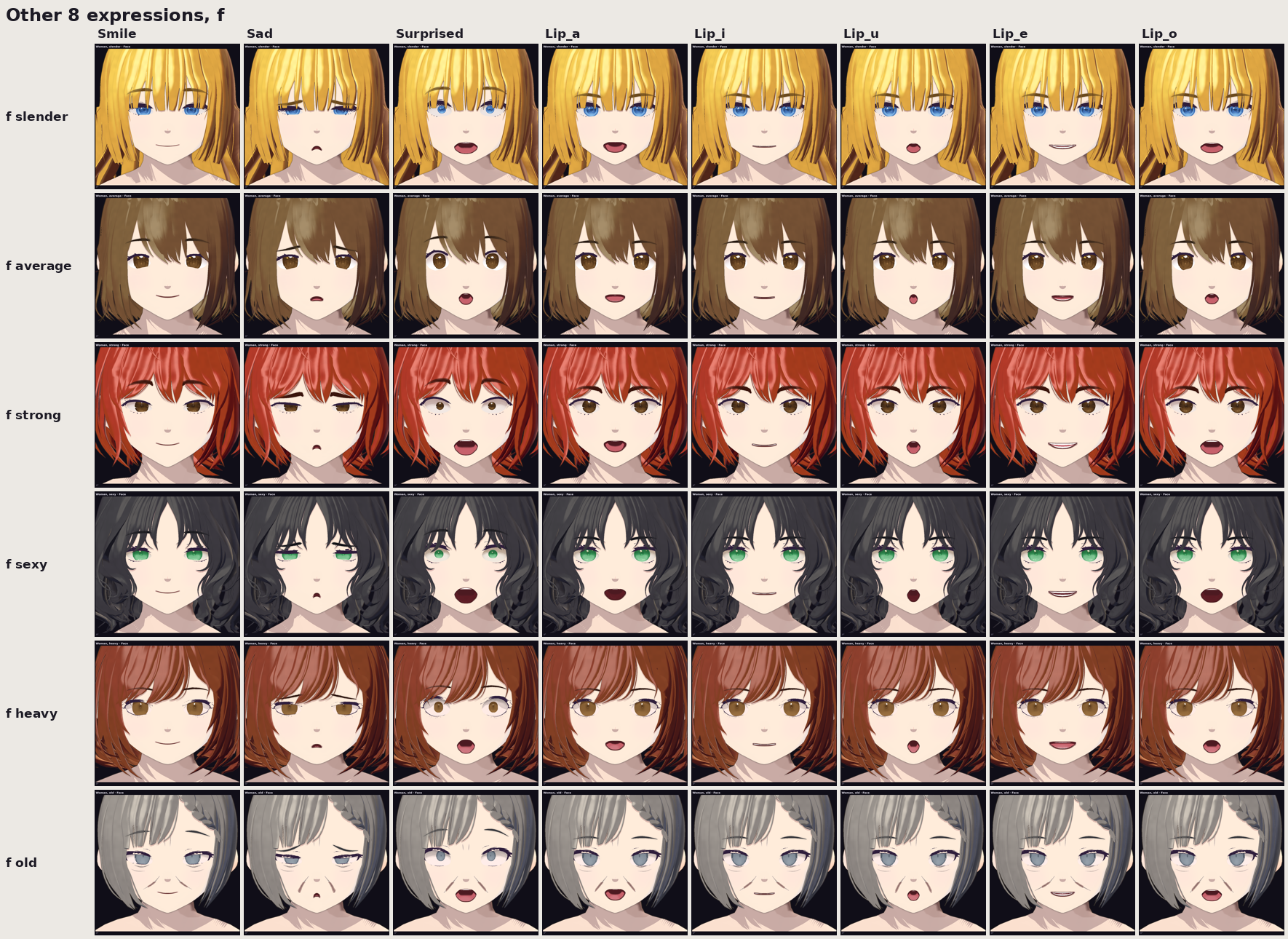
step_44_media_0.png read_file{"Path":"~/.local/share/lowmarch/trials/combined-2026-10-31/all14b_m.png"}
input
{ "Path": "~/.local/share/lowmarch/trials/combined-2026-10-31/all14b_m.png" }result, 1 line
Showing binary file of type image/png
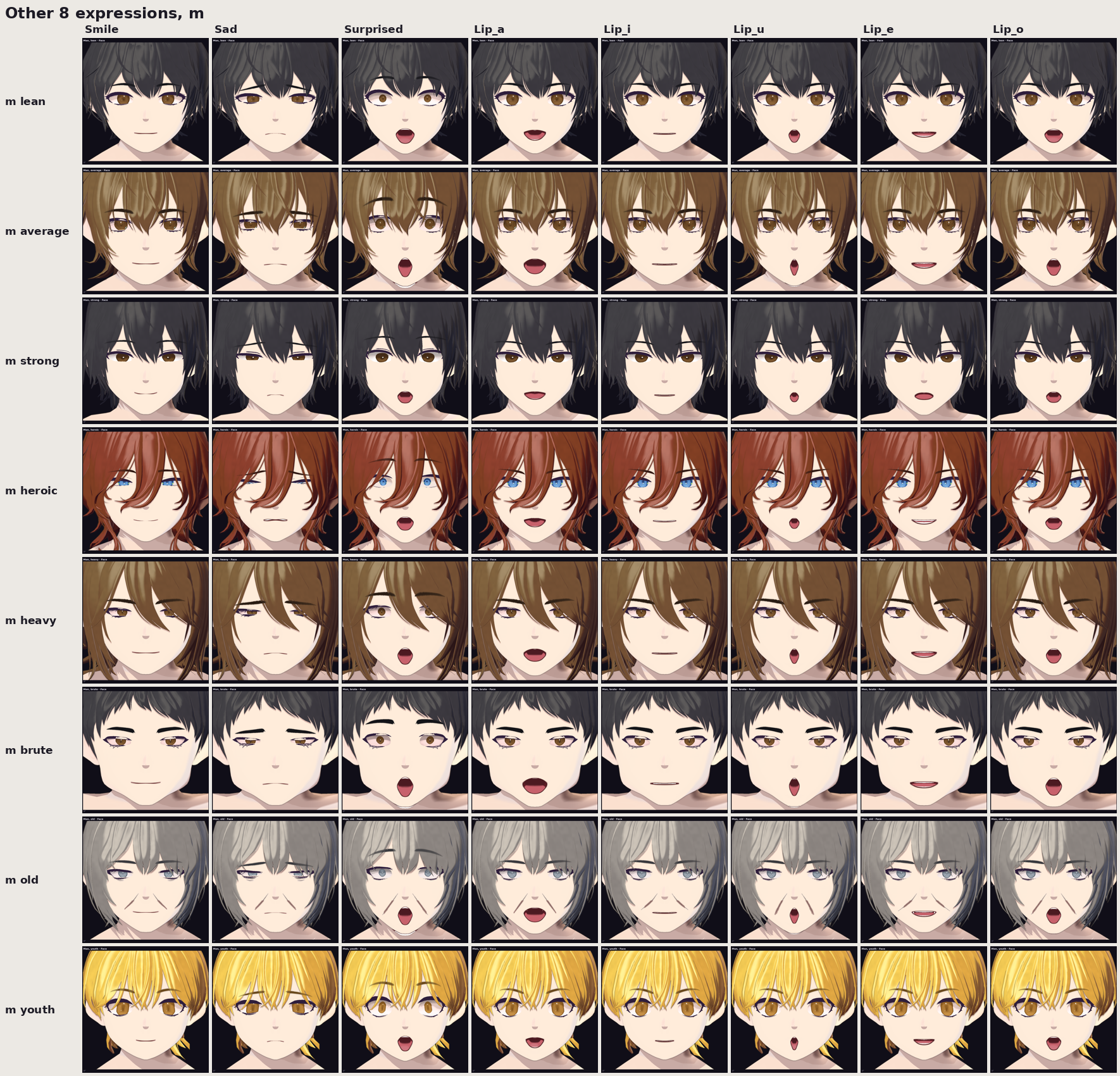
step_100_media_0.png
agent
+9:34reasoning
Here's the summary:
Analyzing the image files, crucial insights emerged from comparing "all14b_f.png" and "all14b_m.png." Specifically, the "arm_f_strong" entry within "all14b_f.png" revealed a clean, parted, short-medium bob hairstyle, linked to specific avatar samples.
The "arm_f_strong" image showcases a specific hairstyle and athletic build, identifying characteristics suitable for a tactical character. Observed flaws include overly shiny hair and a flat face; these can be improved with shader adjustments and facial detailing. Further examination of "arm_m_lean" and "arm_m_strong" is necessary to compare the male builds.
Examining all14b_m.png, "arm_f_sexy" displays parted wavy dark hair, indicating an alternative female character design. Considering the visual, a single battle frame concept is hypothesized, resembling a side-view tactics battle scene from a game like "Unicorn Overlord." Two options emerge: a single protagonist unit heroically framed or a 1v1 duel frame with two units. The single image approach is emphasized to avoid the appearance of a gallery.
Careful consideration of the owner's feedback revealed a preference for battle/duel views, particularly the Aldric versus Brigand scene. The owner's concern about distinguishing body silhouettes strongly suggests the need to showcase two distinct builds in a battle context. The pixel height calculations are the next step.
The calculations for pixel heights based on the single-unit scenario are clear: at 82% height fill, the unit would be approximately 880px tall. For a two-unit battle scene, initial estimates for a 1.72m and 1.88m tall figures were off, requiring recalculation to ensure accurate representation within the specified frame dimensions. Recalculation indicates a 1.70m woman is roughly 890 pixels tall and a 1.88m heavy lancer would be 985 pixels.
The heavy lancer at 1.88m, rendered within the frame, requires a height of 985 pixels. The female vanguard officer at 1.70m would be 890 pixels, establishing the distinct silhouettes needed for the duel. Both figures can occupy the same widescreen tactics battle frame, poised with weapons crossed. The updated design includes Lowmarch costumes, original gear, and improved face and hair shading.
Carefully evaluating the single-character frame versus a two-fighter battle scene reveals potential occlusion issues in the latter, specifically with weapons and shields. Side-view battle games such as Unicorn Overlord and Fire Emblem show the player unit on the left at a specific yaw angle, indicating a preferred camera view. This observation requires further testing of the 2-fighter view.
The optimal camera yaw is determined to be approximately +32 degrees. This specific angle ensures both characters are presented at the ideal three-quarter angle common in anime tactics art. Positioning the characters at -0.82m and +0.82m allows for unobstructed silhouettes and demonstrates body diversity through differing builds and skin tones within the specified frame.
The existing Lowmarch caged models, with added outfits and gear, will be rendered to create a battle scene frame. This approach utilizes the existing cage bodies and integrates the painted renderer within seconds, effectively fulfilling the project requirements in a single visual. Confirming a single 1v1 battle scene image meets the requirement of "a single visual artifact." Faces and builds from the all14b_m.png and all14b_f.png will be examined to select the two contrasting models for the scene.
Comparing the male build options, m brute's sculpt appears uncanny due to exaggerated facial features; m strong and m old present cleaner, more grounded appearances. Height and shoulder breadth comparisons between arm_f_strong, arm_m_strong, and arm_m_heavy are now being evaluated to inform character selection for the battle scene. The goal is to identify models with the greatest silhouette contrast.
run_command{"CommandLine":"python3 -c '\nimport sys, numpy as np\nsys.path[:0] = [\"tools\", \"art/cast\"]\nimport cage, vroid_portrait as vp\nfrom cast import CAST\nfor n in (\"arm_f_slender\", \"arm_f_strong\", \"arm_m_lean\", \"arm_m_strong\", \"arm_m_heroic\", \"arm_m_heavy\", \"arm_m_old\"):\n p = cage.path_for(n, CAST[n][\"cage\"])\n v = vp.VRM(p)\n W = v.node_world()\n nm = v.nodes_by_name()\n prims = v.primitives()\n ys = np.concatenate([q[\"pos\"][:,1] for q in prims if len(q[\"pos\"])])\n sh_w = abs(W[nm[\"J_Bip_R_UpperArm\"]][0,3] - W[nm[\"J_Bip_L_UpperArm\"]][0,3])\n print(f\"{n:15s} height={ys.max()-ys.min():.3f}m shoulder_joint_w={sh_w:.3f}m\")\n'","WaitMsBeforeAsync":5000,"toolSummary":"Check dimensions of cached cage bodies"}
input
{ "CommandLine": "python3 -c '\nimport sys, numpy as np\nsys.path[:0] = [\"tools\", \"art/cast\"]\nimport cage, vroid_portrait as vp\nfrom cast import CAST\nfor n in (\"arm_f_slender\", \"arm_f_strong\", \"arm_m_lean\", \"arm_m_strong\", \"arm_m_heroic\", \"arm_m_heavy\", \"arm_m_old\"):\n p = cage.path_for(n, CAST[n][\"cage\"])\n v = vp.VRM(p)\n W = v.node_world()\n nm = v.nodes_by_name()\n prims = v.primitives()\n ys = np.concatenate([q[\"pos\"][:,1] for q in prims if len(q[\"pos\"])])\n sh_w = abs(W[nm[\"J_Bip_R_UpperArm\"]][0,3] - W[nm[\"J_Bip_L_UpperArm\"]][0,3])\n print(f\"{n:15s} height={ys.max()-ys.min():.3f}m shoulder_joint_w={sh_w:.3f}m\")\n'", "WaitMsBeforeAsync": 5000, "toolSummary": "Check dimensions of cached cage bodies" }result, 10 lines
Command exited with code 0.

Command output:
arm_f_slender   height=1.675m  shoulder_joint_w=0.299m
arm_f_strong    height=1.867m  shoulder_joint_w=0.313m
arm_m_lean      height=1.817m  shoulder_joint_w=0.373m
arm_m_strong    height=1.948m  shoulder_joint_w=0.420m
arm_m_heroic    height=1.909m  shoulder_joint_w=0.426m
arm_m_heavy     height=1.795m  shoulder_joint_w=0.426m
arm_m_old       height=1.698m  shoulder_joint_w=0.371m
agent
+10:28reasoning
Observed distinct physical dimensions for the avatars. Noted the height and shoulder joint width metrics for two different avatar samples. This size difference may be critical to consider.
Considering avatar size disparities to refine the pairing logic. Observed height and shoulder width measurements for different avatar types, highlighting a significant contrast between slender female builds and broad male builds. Focused on pairing arm_f_slender or arm_f_strong with arm_m_strong, considering height and shoulder width. The ideal height for arm_f_strong is 1.72 m to contrast better with arm_m_strong at 1.95 m.
read_file{"EndLine":310,"Path":"~/work/lowmarch/art/cast/cast.py","StartLine":235}
input
{ "EndLine": 310, "Path": "~/work/lowmarch/art/cast/cast.py", "StartLine": 235 }result, 77 lines
Showing lines 235-310 of 464
235:     """A head: a sample's face or a blend (mix: letter -> weight), or a face designed in VRoid Studio's own editor
236:     (face: a VRM under LOWMARCH_VROID, faces/, exported by tools/winvroid; makeup keeps its lips and shadow)."""
237:     sample = [[face, 1.0]] if face else [[f"avatarsample_{k}", w] for k, w in mix.items()]   # in order: the first
238:                                                                                                 # gives the eyes
239:     out = dict(sample=sample, sculpt=sculpt or {}, archetype=archetype)
240:     if hair:
241:         out["hair"] = f"avatarsample_{hair}"
242:     if makeup:
243:         out["makeup"] = True
244:     return out
245:
246:
247: # hair (2026-10-13): a VRoid sample's hairstyle per body (tools/heads.py: warped onto our head, with its springs),
248: # chosen by archetype; its colour (HAIR_COLOURS, the cast's palettes) and the eyes' (EYE_COLOURS) are the body's own,
249: # since the renderers recolour both
250: HEADS = {
251:     "arm_m_lean": _head("young", hair="z", z=1),
252:     "arm_m_average": _head("generic", hair="l", p=0.5, z=0.5),
253:     "arm_m_strong": _head("adult", hair="c", c=0.6, t=0.4),
254:     "arm_m_heroic": _head("adult", hair="r", r=0.6, v=0.4),
255:     "arm_m_heavy": _head("heavy", dict(cheek=0.4), hair="x", x=1),
256:     "arm_m_brute": _head("heavy", dict(jaw=0.8, brow_ridge=0.8), hair="t", t=0.6, x=0.4),
257:     "arm_m_old": _head("adult", dict(brow_ridge=0.8, nose=0.6), hair="n", v=0.6, t=0.4),
258:     "arm_m_youth": _head("young", hair="g", z=0.4, g=0.6),
259:     "arm_f_slender": _head("young", hair="j", j=1),
260:     "arm_f_average": _head("generic", hair="a", a=1),
261:     "arm_f_strong": _head("adult", hair="s", u=1),
262:     "arm_f_sexy": _head("adult", hair="u", q=1),        # (faces/face_sexy.vrm, made in VRoid's editor 2026-10-13 from
263:                                                         # its preset 11, read cuter than this, not sultrier: kept aside)
264:     "arm_f_heavy": _head("generic", dict(cheek=0.4), hair="y", s=0.6, e=0.4),
265:     "arm_f_old": _head("adult", hair="w", m=1),
266: }
267: HAIR_COLOURS = {"arm_m_lean": "black", "arm_m_average": "brown", "arm_m_strong": "black", "arm_m_heroic": "auburn",
268:                 "arm_m_heavy": "brown", "arm_m_brute": "black", "arm_m_old": "grey", "arm_m_youth": "blond",
269:                 "arm_f_slender": "blond", "arm_f_average": "brown", "arm_f_strong": "red", "arm_f_sexy": "black",
270:                 "arm_f_heavy": "auburn", "arm_f_old": "grey"}
271: EYE_COLOURS = {"arm_m_heroic": "blue", "arm_f_sexy": "green", "arm_f_slender": "blue", "arm_m_old": "grey",
272:                "arm_f_old": "grey", "arm_m_youth": "amber"}
273: PORTRAIT = {    # at rest and age lines: name -> shape extras (tools/vroid_portrait.py)
274:     "arm_m_strong": dict(rest={"Fcl_BRW_Angry": 0.4}),
275:     "arm_m_heroic": dict(rest={"Fcl_BRW_Angry": 0.25}),
276:     "arm_m_brute": dict(rest={"Fcl_EYE_Close": 0.28, "Fcl_BRW_Angry": 0.75}),
277:     # fangs: his teeth have sample V's two fangs (they show in an open mouth); fangs=0 files them away (owner's call)
278:     "arm_m_old": dict(age_lines=0.8, blush=0.0, fangs=1.0, rest={"Fcl_EYE_Angry": 0.4, "Fcl_EYE_Close": 0.25,
279:                                                                   "Fcl_BRW_Angry": 0.5, "Fcl_MTH_Down": 0.3}),
280:     "arm_f_old": dict(age_lines=0.6, blush=0.3, rest={"Fcl_EYE_Close": 0.22, "Fcl_MTH_Down": 0.2}),
281:     "arm_f_strong": dict(rest={"Fcl_BRW_Angry": 0.2}),
282: }
283: ARMORY = {      # name: (label, sex, its reference, cage spec beyond base and ref)
284:     "arm_m_lean": ("Man, lean", "m", "ref_m_lean", dict(relax=4)),
285:     "arm_m_average": ("Man, average", "m", "ref_m_average", dict(relax=4)),
286:     "arm_m_strong": ("Man, strong", "m", "ref_m_strong", dict(relax=4, forms=CAGE_STRONG_FORMS)),
287:     "arm_m_heroic": ("Man, heroic", "m", "ref_m_heroic", dict(relax=4, forms=CAGE_HEROIC_FORMS)),
288:     "arm_m_heavy": ("Man, heavy", "m", "ref_m_heavy", dict(relax=4, forms=CAGE_HEAVY_FORMS)),
289:     "arm_m_brute": ("Man, brute", "m", "ref_m_brute", dict(wrap_sigma=(0.02, 0.035), relax=4, forms=CAGE_BRUTE_FORMS)),
290:     "arm_m_old": ("Man, old", "m", "ref_m_old", dict(relax=4)),
291:     "arm_m_youth": ("Man, youth", "m", "ref_m_youth", dict(relax=4)),
292:     "arm_f_slender": ("Woman, slender", "f", "ref_f_slender", dict(relax=4, bust_shape=dict(spread=0.008, drop=0.005, flat=0.25))),
293:     "arm_f_average": ("Woman, average", "f", "ref_f_average", dict(relax=4, bust_shape=dict(spread=0.005, drop=0.008, flat=0.3))),
294:     "arm_f_strong": ("Woman, strong", "f", "ref_f_strong", dict(relax=4, bust=0.1, forms=CAGE_STRONG_F_FORMS,
295:                                                                   bust_shape=dict(spread=0.006, drop=0.006, flat=0.35))),
296:     "arm_f_sexy": ("Woman, sexy", "f", "ref_f_sexy", dict(relax=4, bust=0.2, bust_shape=dict(scale=0.3, inflate=0.025, low=0.02, drop=0.025,
297:                                                                                                spread=0.006, flat=0.4))),
298:     "arm_f_heavy": ("Woman, heavy", "f", "ref_f_heavy", dict(relax=4, bust=0.3, forms=CAGE_HEAVY_F_FORMS,
299:                                                                bust_shape=dict(scale=0.2, inflate=0.025, low=0.025, splay=0.015,
300:                                                                                drop=0.03, spread=0.006, flat=0.45, base=0.1))),
301:     "arm_f_old": ("Woman, old", "f", "ref_f_old", dict(relax=4, bust_shape=dict(spread=0.006, drop=0.015, flat=0.4))),
302: }
303:
304: CAST = {
305:     "aldric": dict(  # young lord
306:         model="hairsample_male/HairSample_Male.vrm", hair="sakurada_fumiriya/Sakurada Fumiriya.vrm",
307:         # heroic proportions after the study's lord: about 7.4 heads (smaller head, longer legs), broad
308:         # shoulders and chest over a narrower waist, thicker neck and limbs
309:         shape=dict(eye=1.14, head=0.93, neck=1.14, chest=1.10, shoulders=1.28, arms=1.10, torso=1.06,
310:                    legs=1.06, leg_len=1.05, hands=1.06),
agent
+10:44reasoning
The script's bounding box calculation for arm_f_strong appears incorrect due to the inclusion of crown hair tufts, adding 8 cm. This contrasts with the known height differences between arm_f_slender and arm_m_strong. This unexpected height difference between the female character types needs further inspection.
Comparing arm_f_strong and arm_m_strong, the initial height discrepancy requires revisiting. Examining J_Bip_C_Head heights should provide the definitive data. The focus is now shifting from overall height to precise head height comparison for accurate silhouette analysis.
The core issue is Lowmarch's failure to integrate the VRoid bodies with its costume/armor system to create a Unicorn Overlord style battle frame. Existing tools produce an incorrect starting point. Focusing on visual bugs in the painted renderer is essential to achieving distinct body builds through authentic costume rendering.
The scene's visual clarity suffers from harsh lighting and a distracting background. The goal is to produce a focused battle frame showcasing distinct body builds. A contrasting background is needed to make the rendered characters stand out.
The battle frame renders both distinct body silhouettes, now evident through layered clothing. Skin tone variations and cel-shaded hair further enhance the visual contrast. The focus shifts to verifying stance data within the clipping script to maintain this clarity.
read_file{"EndLine":180,"Path":"~/work/lowmarch/tools/clips.py","StartLine":1}
input
{ "EndLine": 180, "Path": "~/work/lowmarch/tools/clips.py", "StartLine": 1 }result, 140 lines
Showing lines 1-139 of 139
1: """Battle animation clips, authored as a few key poses and finished with the rig tools (feet
2: planted or stepped with leg IK, the sword aimed by direction rather than by wrist angles).
3:
4:   clips(vrm, shape, stance) -> {name: [(time, pose), ...]}
5: """
6: import numpy as np
7:
8: import poses as P
9: from rig import Rig
10:
11: BLADE = (0, 0, -1)          # the sword's blade in the right hand's frame (see outfit.sword)
12:
13:
14: def clips(vrm, shape=None, stance="sword"):
15:     """stance: "sword" (one hand, the cast's default) or "polearm" (both hands, see polearm())."""
16:     if stance == "polearm":
17:         return polearm(vrm, shape)
18:     rig = Rig(vrm, shape)
19:     idle = P.BATTLE_IDLE
20:     foot = {s: rig.pos(idle, f"J_Bip_{s}_Foot") for s in "LR"}
21:     step = np.array([0.0, 0.0, -0.36])                     # the lead (left) foot steps forward
22:
23:     def finish(pose, lead=0.0, blade=None):
24:         pose = rig.leg_ik(pose, "L", foot["L"] + step * lead)
25:         pose = rig.leg_ik(pose, "R", foot["R"])
26:         if blade is not None:
27:             pose = rig.aim(pose, "J_Bip_R_Hand", BLADE, blade)
28:         return pose
29:
30:     wind = finish(P.WIND_UP, 0.0, blade=(0.15, 0.55, 1.0))       # blade back over the shoulder
31:     slash = finish(P.SLASH, 1.0, blade=(0.1, -0.55, -1.0))       # forward and down through the target
32:     follow = finish(P.FOLLOW, 1.0, blade=(-0.45, -1.0, -0.15))   # carried down across the body
33:     breathe = finish(P.IDLE_BREATH, 0.0)
34:     return {
35:         "idle": [(0.0, idle), (0.9, breathe), (1.8, idle)],
36:         "attack": [(0.0, idle), (0.32, wind), (0.44, wind), (0.56, slash), (0.68, follow), (1.05, follow),
37:                    (1.5, idle)],
38:     }
39:
40:
41: def fists(rig):
42:     """Where each fist closes in the reference pose: the point a held weapon's shaft runs through, as
43:     gear._hand_frame places it (rig.grip_points: measured from the curled fingers)."""
44:     from rig import grip_points
45:     return {side: g["point"] for side, g in grip_points(rig.v, rig.shape, P.BUST).items()}
46:
47:
48: # The polearm's keys: hips drop and forward shift, turn of the shoulders (- brings the left one
49: # forward), forward lean, the lead foot's step; the right fist from the right shoulder in arm lengths
50: # (x: the fighter's right, -z forward), the shaft's direction (head end), and the left arm's reach
51: # (shoulder to fist, in arm lengths): the left fist holds the shaft where that reach meets it, so
52: # every build gets bent elbows rather than a fixed hand spacing that some arms can't span.
53: POLEARM = {
54:     "wind": dict(drop=0.075, turn=-26.0, lean=3.0, fwd=-0.03, lead=0.0, fist=(0.13, -0.52, -0.04),
55:                  shaft=(-0.22, 0.30, -0.93), reach=0.78),
56:     "thrust": dict(drop=0.09, turn=-18.0, lean=14.0, fwd=0.17, lead=0.30, fist=(-0.10, -0.42, -0.50),
57:                    shaft=(-0.28, 0.06, -0.96), reach=0.92),
58:     "follow": dict(drop=0.095, turn=-16.0, lean=16.0, fwd=0.19, lead=0.30, fist=(-0.12, -0.46, -0.52),
59:                    shaft=(-0.28, 0.0, -0.96), reach=0.92),
60: }
61: # The guard's idle, after the study of Unicorn Overlord's idles (a mercenary's, tracked frame by frame):
62: # a 2 s loop with the feet planted; the hips sink about 2% of the height and ease forward, the chest
63: # sinks further (the lean deepens) and the head stays level; a slow rise, a short hold at the top, a
64: # quicker sink and a longer settle; the weapon's head dips as the body sinks, a beat behind it.
65: # GUARD_TOP and GUARD_LOW are the two ends; IDLE_SINK says how far sunk (0 top, 1 low) over the loop,
66: # eased between its points; the loop is sampled every IDLE_STEP and each sample grips afresh.
67: GUARD_TOP = dict(drop=0.050, turn=-14.0, lean=3.0, fwd=0.0, lead=0.0, fist=(0.04, -0.60, -0.26),
68:                  shaft=(-0.32, 0.44, -0.84), reach=0.80)
69: GUARD_LOW = dict(drop=0.092, turn=-16.0, lean=11.0, fwd=0.014, lead=0.0, fist=(0.04, -0.60, -0.26),
70:                  shaft=(-0.32, 0.37, -0.87), reach=0.80)
71: IDLE_LOOP, IDLE_STEP, SHAFT_LAG = 2.0, 0.1, 0.1
72: IDLE_SINK = [(0.0, 1.0), (0.15, 1.0), (0.85, 0.0), (1.15, 0.0), (1.55, 1.0), (2.0, 1.0)]
73:
74:
75: def sink(t):
76:     """How far sunk the guard is at time t of the idle loop (0 top .. 1 low), eased between points."""
77:     t = t % IDLE_LOOP
78:     for (t0, a), (t1, b) in zip(IDLE_SINK[:-1], IDLE_SINK[1:]):
79:         if t0 <= t <= t1:
80:             x = (t - t0) / max(t1 - t0, 1e-9)
81:             return a + (b - a) * x * x * (3 - 2 * x)
82:     return IDLE_SINK[-1][1]
83:
84:
85: def guard_at(t):
86:     """The guard's parameters at time t of the idle loop."""
87:     k, ks = sink(t), sink(t - SHAFT_LAG)
88:     out = {n: (GUARD_TOP[n] + (GUARD_LOW[n] - GUARD_TOP[n]) * k) if isinstance(GUARD_TOP[n], float) else GUARD_TOP[n]
89:            for n in GUARD_TOP}
90:     out["shaft"] = tuple(a + (b - a) * ks for a, b in zip(GUARD_TOP["shaft"], GUARD_LOW["shaft"]))
91:     return out
92:
93:
94: def polearm(vrm, shape=None, keys=None):
95:     """A halberd in both hands (it is rigid on the right hand), after the study's soldiers: a wide,
96:     low guard, left foot forward, the shaft across the body with its head forward and up, the right
97:     fist by the hip and the left up the shaft at chest height, elbows bent and out of the body. The
98:     attack draws the shaft back and thrusts it forward on a lunge, both hands on it throughout.
99:     Each key grips with rig.grip so the left fist lands on the shaft where the right hand holds it."""
100:     from checks import Body
101:     from duel import clear_grip
102:     rig = Rig(vrm, shape)
103:     body = Body(vrm, shape)
104:     f = fists(rig)
105:     ref = dict(ref_pose=P.BUST, fist_R=f["R"], fist_L=f["L"])
106:     base = P.merge(P.BATTLE_IDLE, P.fist("L"))
107:     foot = {s: rig.pos(base, f"J_Bip_{s}_Foot") for s in "LR"}
108:     arm = {s: rig.pos(P.BUST, f"J_Bip_{s}_LowerArm") - rig.pos(P.BUST, f"J_Bip_{s}_UpperArm") for s in "LR"}
109:     span = {s: float(np.linalg.norm(arm[s]) + np.linalg.norm(f[s] - rig.pos(P.BUST, f"J_Bip_{s}_LowerArm"))) for s in "LR"}
110:
111:     def guard(drop, turn, lean, fwd, lead, fist, shaft, reach):
112:         # the lean comes mostly from the hips: a bent spine pushed the breastplate's hem through the belt
113:         pose = P.merge(base, {
114:             "J_Bip_C_Hips": P.move(0, -drop, -fwd, P.rot((1, 0, 0), -lean * 0.65)),
115:             "J_Bip_C_Spine": P.rot((0, 1, 0), turn * 0.6) @ P.rot((1, 0, 0), -lean * 0.2),
116:             "J_Bip_C_Chest": P.rot((0, 1, 0), turn * 0.4) @ P.rot((1, 0, 0), -lean * 0.15),
117:             "J_Bip_C_Neck": P.rot((0, 1, 0), -turn * 0.5) @ P.rot((1, 0, 0), lean * 0.35),
118:             "J_Bip_C_Head": P.rot((0, 1, 0), -turn * 0.3) @ P.rot((1, 0, 0), lean * 0.35)})   # the gaze stays level
119:         pose = rig.leg_ik(pose, "L", foot["L"] + np.array([-0.07, 0, -0.14 - lead]))
120:         pose = rig.leg_ik(pose, "R", foot["R"] + np.array([0.06, 0, 0.12]), pole=(0, -0.2, -1))
121:         D = np.asarray(shaft, float) / np.linalg.norm(shaft)
122:         fr = rig.pos(pose, "J_Bip_R_UpperArm") + span["R"] * np.asarray(fist, float)
123:         # the left fist: the point up the shaft at `reach` from the left shoulder
124:         q = fr - rig.pos(pose, "J_Bip_L_UpperArm")
125:         b, c = float(D @ q), float(q @ q) - (reach * span["L"]) ** 2
126:         t = -b + np.sqrt(max(b * b - c, 0.0))          # (out of reach: the shaft's nearest point)
127:         t = float(np.clip(t, 0.22, 0.48))
128:         pose = clear_grip(rig, body, pose, "R", ref, fr, D, (0.6, -0.4, 0.7))
129:         return clear_grip(rig, body, pose, "L", ref, fr + D * t, D, (-0.8, -1.0, 0.1))
130:     k = {n: guard(**v) for n, v in (keys or POLEARM).items()}
131:     n = int(round(IDLE_LOOP / IDLE_STEP))
132:     idle = [(round(i * IDLE_STEP, 3), guard(**guard_at(i * IDLE_STEP))) for i in range(n)]
133:     idle.append((IDLE_LOOP, idle[0][1]))                     # the loop closes on its first pose
134:     rest = idle[0][1]
135:     return {
136:         "idle": idle,
137:         "attack": [(0.0, rest), (0.32, k["wind"]), (0.44, k["wind"]), (0.56, k["thrust"]), (0.68, k["follow"]),
138:                    (1.05, k["follow"]), (1.5, rest)],
139:     }
agent
+11:15reasoning
The code snippet analyzes frame-by-frame animation data, specifically a polearm wielding idle animation. This includes tracking the animation duration, identifying breathing cycles, and hand and foot positions during the animation.
read_file{"EndLine":180,"Path":"~/work/lowmarch/tools/duel.py","StartLine":1}
input
{ "EndLine": 180, "Path": "~/work/lowmarch/tools/duel.py", "StartLine": 1 }result, 141 lines
Showing lines 1-140 of 140
1: """Two characters locked in a sword bind (a struggle over crossed blades), authored on one shared
2: stage so the blades really meet.
3:
4: Stage space is the viewer's world: x to the right, y up, z toward the default camera. A character
5: stands at `pos`, turned `yaw` degrees about y. Its GLB faces +z (the exporter's FLIP of VRoid's -z),
6: so model point m lands at  pos + Ry(yaw) @ (FLIP * m).  The player stands on the right facing left,
7: the opponent on the left facing right, both turned a little toward the camera (the study: battle
8: sprites are drawn three-quarter, not in profile).
9:
10: Each character's sword is rigid on its right hand (outfit.sword): the fist point and blade axis are
11: taken from the hand in the reference pose. Arms reach with rig.grip so each blade runs through the
12: shared crossing point; a two-handed fighter's left fist sits further down the grip.
13:
14:   duel_clips({name: (vrm, shape, ref_pose, sword_info)}, cast) -> {name: [(t, pose)...]}, placements
15: """
16: import math
17:
18: import numpy as np
19:
20: import poses as P
21: from rig import Rig
22:
23: FLIP = np.array([-1.0, 1.0, -1.0])
24:
25:
26: def ry(deg):
27:     a = math.radians(deg)
28:     return np.array([[math.cos(a), 0, math.sin(a)], [0, 1, 0], [-math.sin(a), 0, math.cos(a)]])
29:
30:
31: def to_model(w, place):
32:     return FLIP * (ry(-place["yaw"]) @ (np.asarray(w, float) - np.asarray(place["pos"], float)))
33:
34:
35: def dir_to_model(d, place):
36:     return FLIP * (ry(-place["yaw"]) @ np.asarray(d, float))
37:
38:
39: # The bind, in stage space. Fists sit below and outside the crossing point; the blades rise
40: # through it in an X above the fighters' heads.
41: CROSS = np.array([0.0, 1.47, -0.02])
42: SIDES = {
43:     # name: stands on, turned, fist offset from the crossing point, hands, stance. `reach`, if given,
44:     # places the fighter instead of `x`: where the fist sits from the chest across and forward (model
45:     # space x, z: +x the fighter's right, -z forward). A two-handed grip close in and a little to the
46:     # left keeps both arms bent and out of the body (checks.Body measured 2 cm clear; further out,
47:     # the short left arm straightens across the chest)
48:     "player": dict(x=0.66, yaw=-62.0, fist=(0.29, -0.25, -0.07), two_hands=False, step=(0.20, 0.22)),
49:     "opponent": dict(yaw=62.0, fist=(-0.22, -0.25, 0.04), two_hands=True, step=(0.09, 0.11),   # a long dress: a short stance
50:                      reach=(-0.04, -0.29)),
51: }
52: # elbow directions tried for a gripping arm (model space, right arm; mirrored for the left): the
53: # first that keeps the arm clear of the body wins, else the clearest
54: POLES = [(0.9, -0.8, 0.0), (1.0, -0.5, -0.2), (0.6, -1.0, -0.3), (1.0, -0.2, -0.4), (0.4, -1.0, 0.6)]
55: CLEAR = 0.02
56: # the struggle: the crossing point drifts toward whoever is giving ground; hips press in
57: BEATS = [(0.0, 0.0), (0.8, 1.0), (1.6, -1.0), (2.4, 0.0)]      # (time, push: + player winning)
58:
59:
60: def stance(rig, base, lead_step=0.20, back_step=0.22, spread=0.11, drop=0.07, lean=9.0, push=0.0):
61:     """A fencing stance in model space: left foot forward, right foot back, knees bent, hips low,
62:     torso leaning into the bind. push > 0 presses forward, < 0 gives ground."""
63:     pose = P.merge(base, {
64:         "J_Bip_C_Hips": P.move(0, -drop, -0.035 - 0.025 * push),
65:         "J_Bip_C_Spine": P.rot((1, 0, 0), -lean * 0.5 - 2.5 * push),
66:         "J_Bip_C_Chest": P.rot((1, 0, 0), -lean * 0.5 - 1.5 * push),
67:         "J_Bip_C_Neck": P.rot((1, 0, 0), 6 + 2 * push),
68:         "J_Bip_C_Head": P.rot((1, 0, 0), 4),
69:     })
70:     foot = {s: rig.pos(base, f"J_Bip_{s}_Foot") for s in "LR"}
71:     lead = foot["L"] + np.array([-spread * 0.3, 0, -lead_step])
72:     back = foot["R"] + np.array([spread * 0.3, 0, back_step])
73:     pose = rig.leg_ik(pose, "L", lead, pole=(0, 0, -1))
74:     return rig.leg_ik(pose, "R", back, pole=(0, -0.2, -1))
75:
76:
77: def placements(order, chars=None):
78:     """order: {"player": name, "opponent": name} -> {name: {pos, yaw}}. A side with `reach` stands
79:     where its fist (chest + reach, in its stance) lands on its fist point in the bind; height
80:     follows from the fist point."""
81:     out = {}
82:     for r in ("player", "opponent"):
83:         sd, name = SIDES[r], order[r]
84:         if "reach" not in sd:
85:             out[name] = dict(pos=[sd["x"], 0.0, 0.0], yaw=sd["yaw"])
86:             continue
87:         c = chars[name]
88:         rig = Rig(c["vrm"], c["shape"], ortho=True)
89:         pose = stance(rig, P.BATTLE_IDLE, lead_step=sd["step"][0], back_step=sd["step"][1])
90:         fist_m = rig.pos(pose, "J_Bip_C_UpperChest") + np.array([sd["reach"][0], 0.0, sd["reach"][1]])
91:         pos = CROSS + np.array(sd["fist"]) - ry(sd["yaw"]) @ (FLIP * fist_m)
92:         out[name] = dict(pos=[round(float(pos[0]), 4), 0.0, round(float(pos[2]), 4)], yaw=sd["yaw"])
93:     return out
94:
95:
96: def clear_grip(rig, body, pose, side, c, fist_m, blade_m, pole0):
97:     """rig.grip, trying elbow directions until the arm clears the body (a checks.Body)."""
98:     mirror = np.array([-1.0, 1.0, 1.0]) if side == "L" else np.ones(3)
99:     limbs = [f"{side}_UpperArm", f"{side}_LowerArm", f"{side}_Hand"]
100:     best = None
101:     for pole in [pole0] + [tuple(np.array(q) * mirror) for q in POLES]:
102:         p = rig.grip(pose, side, c["ref_pose"], c[f"fist_{side}"], fist_m, blade_m, pole=pole)
103:         cl = body.worst(p, limbs)
104:         if cl >= CLEAR:
105:             return p
106:         if best is None or cl > best[0]:
107:             best = (cl, p)
108:     return best[1]
109:
110:
111: def duel_clips(chars, order):
112:     """chars: {name: dict(vrm, shape, ref_pose, fist_R, fist_L)} (fists: reference-pose model points on
113:     each hand). Returns {name: [(t, pose), ...]} for the 'clash' clip, and the placements."""
114:     from checks import Body
115:     place = placements(order, chars)
116:     out = {}
117:     for role in ("player", "opponent"):
118:         name = order[role]
119:         c, sd, pl = chars[name], SIDES[role], place[name]
120:         rig = Rig(c["vrm"], c["shape"], ortho=True)
121:         body = Body(c["vrm"], c["shape"]) if sd["two_hands"] else None
122:         base = P.merge(P.BATTLE_IDLE, P.fist("L") if sd["two_hands"] else {})
123:         keys = []
124:         for t, push in BEATS:
125:             mine = push if role == "player" else -push
126:             cross = CROSS + np.array([-0.035 * push, -0.012 * abs(push), 0])
127:             fist_w = cross + np.array(sd["fist"]) + np.array([-0.02 * push, 0, 0]) * (1 if role == "player" else 1)
128:             blade_w = (cross - fist_w) / np.linalg.norm(cross - fist_w)
129:             fist_m, blade_m = to_model(fist_w, pl), dir_to_model(blade_w, pl)
130:             pose = stance(rig, base, lead_step=sd["step"][0], back_step=sd["step"][1], push=mine)
131:             if sd["two_hands"]:                          # both arms in front of the body: keep them out of it
132:                 pose = clear_grip(rig, body, pose, "R", c, fist_m, blade_m, (0.7, -1.0, 0.35))
133:                 pose = clear_grip(rig, body, pose, "L", c, fist_m - blade_m * 0.095, blade_m, (-0.7, -1.0, 0.35))
134:             else:                                        # free arm (shield) braced low and out for balance
135:                 pose = rig.grip(pose, "R", c["ref_pose"], c["fist_R"], fist_m, blade_m, pole=(0.7, -1.0, 0.35))
136:                 pose = rig.arm_ik(pose, "L", rig.pos(pose, "J_Bip_L_UpperArm") + np.array([-0.12, -0.38, 0.06]),
137:                                   pole=(-0.3, -0.2, 1.0))
138:             keys.append((t, pose))
139:         out[name] = keys
140:     return out, place